Digital exclusion among older people is a systemic challenge that can’t be solved through skills training or devices alone. With funding from DSIT’s Digital Inclusion Innovation Fund, the DG Cities team is working with a consortium of councils and academic partners to test a new, neighbourhood-level approach to understanding the issue - Behavioural Systems Mapping.
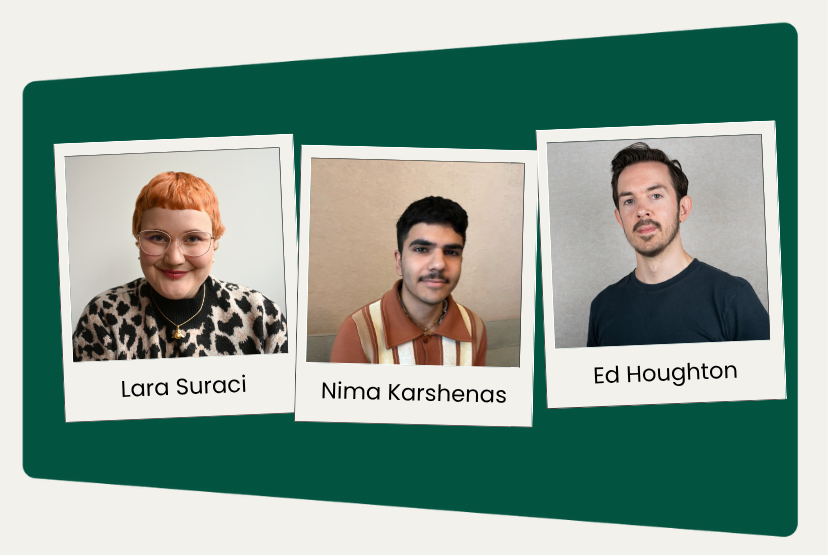
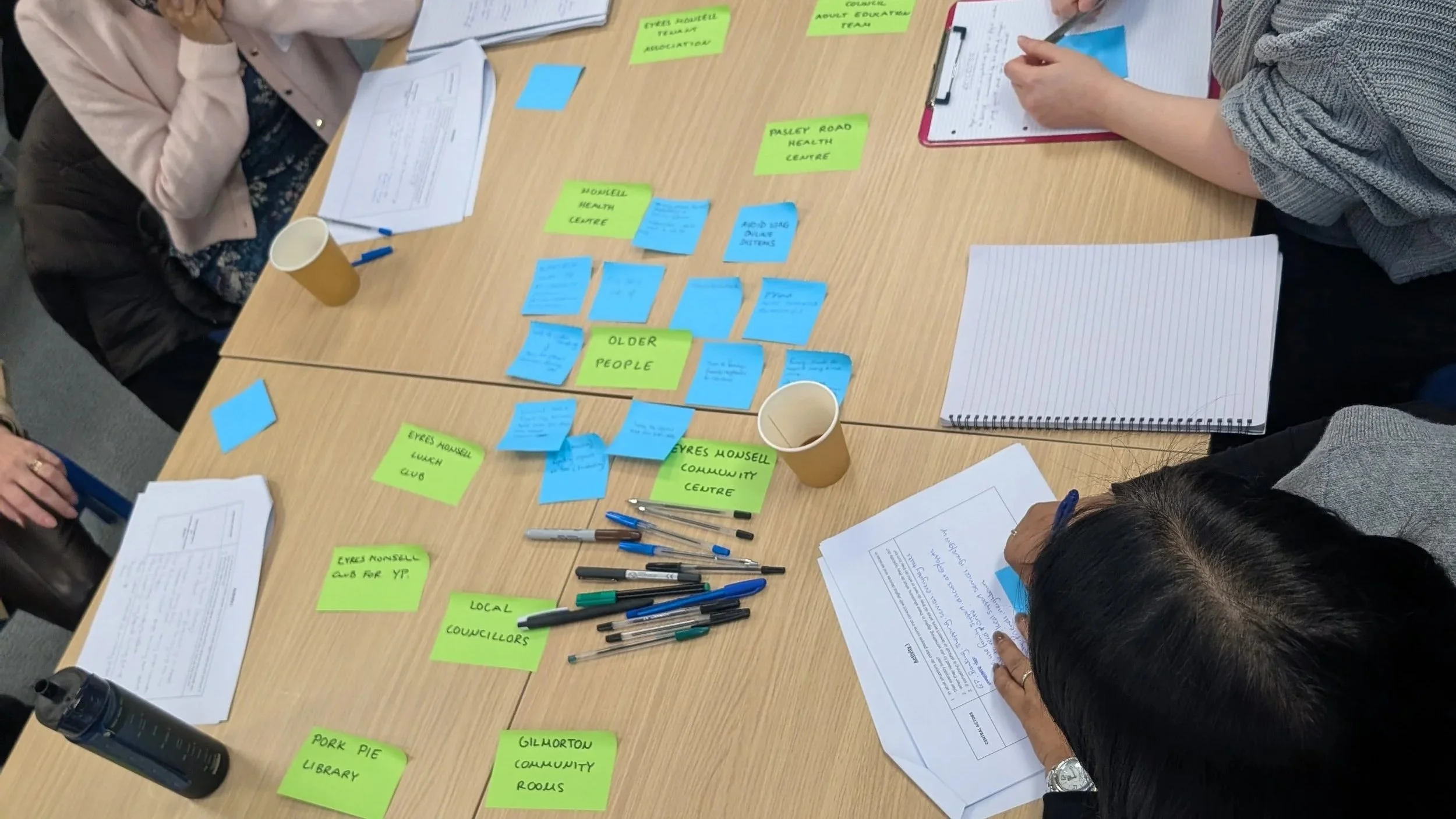
By combining behavioural science and systems thinking, the project aims to uncover the local factors that shape people’s experiences. The team has already been out running workshops with local groups across the UK. The aim is to shift the focus from changing individual behaviour to redesigning systems and services to create more inclusive, responsive digital environments for older people, as Director of Research & Insights, Ed Houghton explains.
Digital exclusion is a major challenge for older people across the country. Three quarters (77%) of those without any basic digital skills are aged over 65, and 29% of older people report feeling left behind by online services (Good Things Foundation, 2025). For those who are excluded, daily life can be stressful, creating anxiety and increasing their reliance on family and friends to do tasks, stopping them feeling as able to live independently.
There’s no quick fix to tackle digital exclusion - the technology itself is just one factor. The root cause is a systemic issue arising from structural inequalities in income, education, infrastructure and policy design; people are rarely excluded by choice, but by the way society organises access to technology and services, and supports people to use them.
Local authorities, business, the third sector and the wider community all have a role to play in supporting vulnerable people to become more digitally included. The first challenge is to understand what needs to change.
At DG Cities, we believe that the way to tackle the challenge is to move from solutions that place the burden to change behaviour on those who are digitally excluded and instead create ways for the wider system to change, creating organisations and services that adapt to meet the needs of vulnerable people. To do this, we’re undertaking novel research into a new research method: behavioural systems mapping.
Where best can we create change?
Over the coming months, our team will be travelling across the country to answer a critical question: "can a behavioural systems approach help us design better, more impactful digital inclusion strategies for older people? This work is supported by government as part of the Department for Science, Innovation and Technology’s (DSIT) Digital Inclusion Innovation Fund.
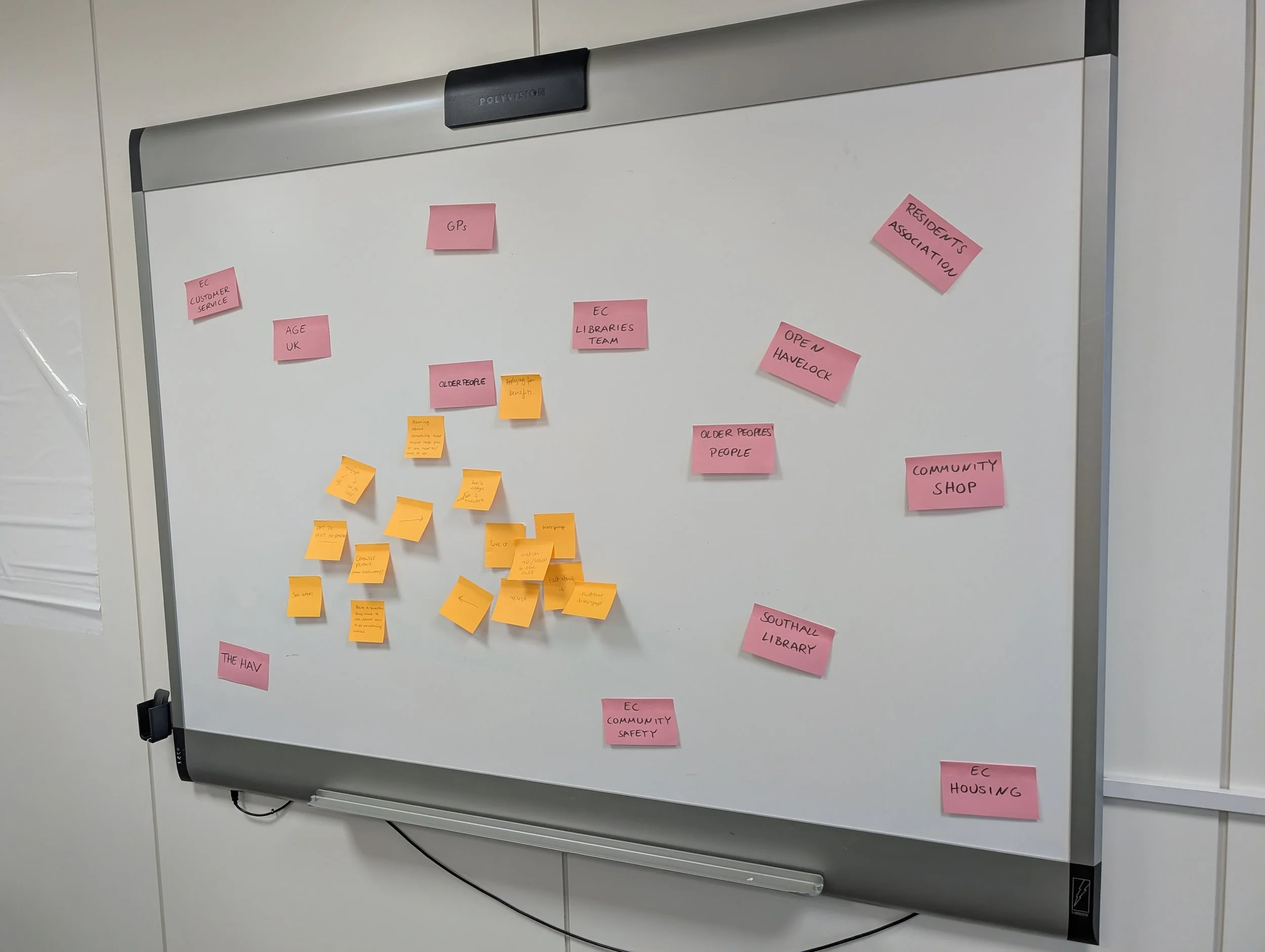
Digital exclusion is rarely just down to one thing. It can be the result of a complex mix of skills, trust, access and motivation factors that varies from person to person (and place to place). Behavioural Systems Mapping (BSM) is a new method that combines behavioural science with systems thinking to diagnose the root causes of exclusion in real-world settings, and then helps to define the best places in the system to apply effort and create change.
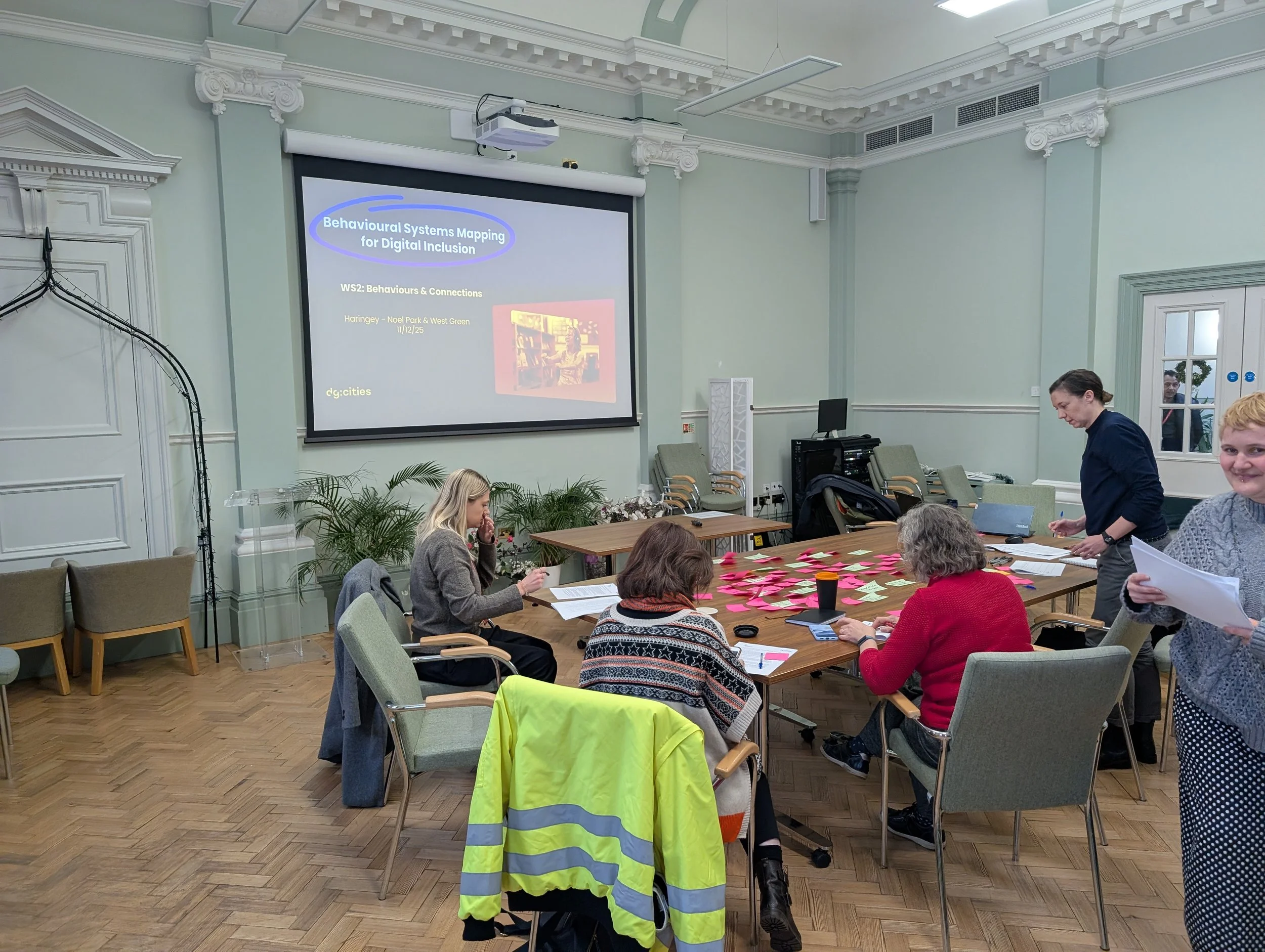
Taking into account place-based variation, we are also taking a hyper-local approach to understanding digital exclusion. Through workshops, dialogue and analysis, we’re identifying some of the more unique neighbourhood and community factors that mean some elderly people might feel excluded, whilst their neighbours two streets down feel confident, capable and connected to the online world.



Testing what works in the real world
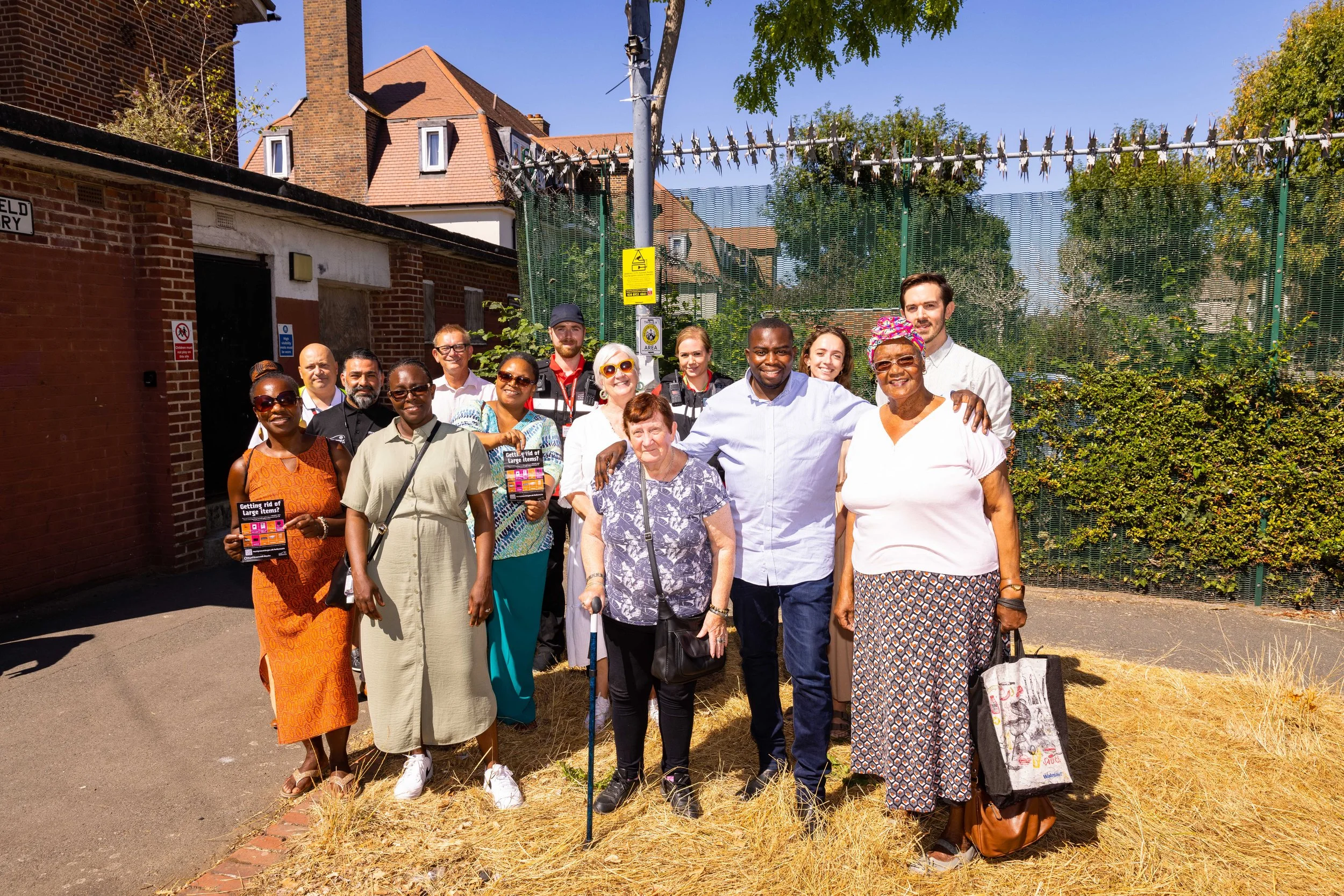
Vitally, this project isn’t just about theory. It’s about rigorous, on-the-ground testing. Building on our successful pilot in Greenwich this summer, we are now taking this approach to five very different neighbourhoods across the UK. As the delivery team, we’re running research for a consortium that includes Royal Borough of Greenwich, Ealing Council, Haringey Council, Leicester City Council, North East Lincolnshire Council and we’re supported by experts at the UCL Centre for Behaviour Change.
By delivering workshops in these diverse local authorities, we will test the wider applicability of our own methods and how this new approach can be adapted to different neighbourhoods. We want to see if behavioural systems mapping can consistently help local teams understand their specific local challenges and co-design interventions that truly support residents over sixty.

Sharing the tools for change
Our goal is not just to improve strategies in these five boroughs, but to create blueprint for each neighbourhood that can be used to support communities across the UK to develop their own approaches. We believe that if this method works effectively, it should be in the hands of every local authority and community organisation tackling digital exclusion.
Over the next few months, we’ll be working hard to capture and learn with our partners and will be sharing insights as we go. At the end of the project, we’ll translate these experiences into practical tools and resources that others can use. This dissemination is an important aspect of the project. By sharing this method widely, we hope to empower communities across the country to build more effective, evidence-based digital inclusion strategies.
We’d like to take the opportunity to thank our partners and all the participants in our research so far for their time and insights. Follow the team on LinkedIn for the latest updates on the project.