Countdown to COP26

You’ve probably heard a lot about COP26 this year and might wonder what it is and what it might mean for you. We’ve taken a closer look and have outlined below why COP26 is one of the most important events in the global climate change policy agenda:

228735_climateprotestsign_46490_crop.jpg


What is COP26? 

We’re nearly a month away from this year’s United Nations’ Conference of Parties, COP26, a global leadership summit on climate change topics. 

This year’s climate change conference will take place in Glasgow, Scotland, with the UK acting as a president of COP26. World leaders - alongside negotiators, government representatives, businesses and citizens - will visit Glasgow on October 31st for twelve days of important discussions about the global climate change crisis.

Why is it crucial? 

In 2015  the Paris Agreement was signed in which global leaders committed to developing plans called National Determined Contributions (NDCs), outlining how they would reduce their emissions.


COP26 marks five years since the signing of the agreement. 197 countries will be required to update their NDCs with much more stringent and ambitious targets that will ultimately aim to limit global warming to 1.5 degrees by 2050. This process will occur through negotiations between the different countries. 

In detail, at COP26: 

  1. Countries will present ambitious 2030 emissions reductions targets that align with reaching net zero by 2050.

  2. Countries will present plans demonstrating how they are adapting to climate change. Countries will need to support citizens that are most affected by climate change. 

  3. Developed countries must present $100 billion in climate finance to support developing countries meet their net-zero commitments.  

  4. The UK, as COP26 President, must negotiate and finalise rules that will enable the Paris Agreement commitments to be met. 


Why do we need to act now more than ever? 

Recently, the United Nations’ Intergovernmental Panel on Climate Change (IPCC) published the sixth assessment report on climate science, which summarises the physical science for climate change from thousands of peer-reviewed studies. 

The report is stark and ominous, and provides strong evidence to demonstrate that humans are responsible for causing this widespread climate destruction, much of which is irreversible. The impacts of climate change can no longer be ignored. 

The report also highlights that the current NDCs outlined by countries to achieve net-zero are not sufficient enough to keep warming below 2 degree celsius; further proving why COP26 is so important. 

The IPCC stresses that if net-zero CO2 emissions are not reached by 2050, and there isn’t an overall reduction in global greenhouse gas emissions, then the 1.5 and 2 degree limits set out in the Paris Agreement will be reached before 2040.

Reaching net-zero requires collective effort from countries to shift to renewables, and to reduce emissions from practices with a high global warming impact: agriculture, particularly meat farming, fossil fuel production and waste management. 

Reducing greenhouse gas emissions will help us minimize the catastrophic weather risks of global warming - including sea level rise, glacier melting, rainfall, floods and droughts. 

DG Cities and Net-Zero 

 DG Cities is an innovation company that is focused on supporting cities and communities to capitalise on the benefits of technology and data. As a company we have  worked on a number of major projects relating to the transition to a low-carbon future ranging from net-zero housing, decarbonisation and fleet electrification (Birchmere & ERCV), to support local councils such as the Royal Borough of Greenwich meet their carbon reduction targets. 

In recognition of our work in electrification we’ve also recently been awarded further funding that focuses on fleet electrification in Greenwich, London and Devon, Cornwall. This is exciting as we will be exploring both urban and rural applications of this vital technology.

COP26 is an important global milestone on the journey towards a low-carbon future. As the world looks expectantly on, many will wonder how the discussions and meetings in Glasgow will translate into practical changes in the day-to-day lives of citizens and businesses. We’re here to help, so at DG Cities we’ll be keeping a close eye on the discussions and working hard to make sense of what COP26 will mean for UK towns and cities. Follow our blog to find out more. 


Urban Innovation at the Front Line: August at DG Cities

Urban Innovation at the Front Line: August at DG Cities

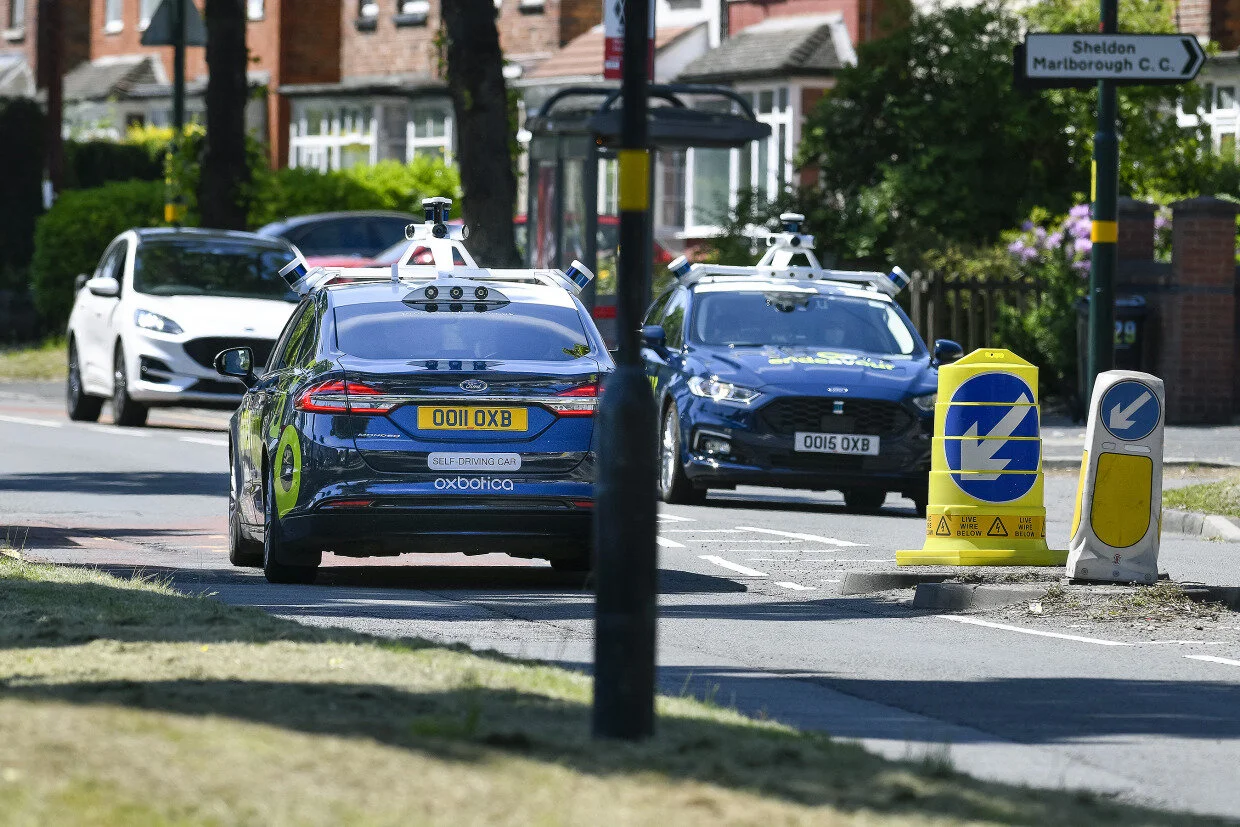
After a very (very!) busy month running the Project Endeavour autonomous vehicle (AV) trials here in Greenwich alongside Oxbotica, we’re only just beginning to catch our breath. The trial was a hugely exciting and insightful experience and we are grateful to the support of our project partners, as well as the members of the public who joined in! So today on the blog, we’re reflecting on this eventful August and discussing all things Endeavour trials!

Autonomous Vehicle Trials on Public Highway: Our New Go-To Guide

Autonomous Vehicle Trials on Public Highway: Our New Go-To Guide

What does an autonomous vehicle (AV) trial coming to town mean for the councils “hosting” them? Part of DG Cities’ work on Project Endeavour was to understand what a range of local authorities knew about connected and automated mobility in general, and trials in particular. It’s an important piece of the puzzle and will be critical in fulfilling the project’s aim of accelerating and scaling the deployment of AV services on public roads in cities across the UK.

Urban Innovation at the Front Line: June at DG Cities

Urban Innovation at the Front Line: June at DG Cities

We’ve officially made it halfway through 2021. Whether you’ve found the year has zoom-ed by or travelled at a snail’s pace, it’s safe to say that the tempo of the city has been on a steady incline as we inch back to normalcy. Our June was similarly energising thanks to a number of successful events and some exciting developments to grow the DG Cities team. So, today on the blog we’re rounding up the highlights that made this an especially memorable month.

Heading North: The Project Endeavour Birmingham Showcase

Heading North: The Project Endeavour Birmingham Showcase

Project Endeavour has arrived in Birmingham! The project - which aims to accelerate and scale the deployment of autonomous vehicle (AV) services on public roads in cities across the country - has kicked off the next phase of trials in the UK’s second largest city. To mark the occasion, the Project Endeavour partners hosted a two-day showcase to share updates about the project and exciting developments. This is the second in a series of three showcases for Endeavour, with the third and final event being held in our neck of the woods later this summer, when the Greenwich trials begin.

Getting Wild: The Benefits of Biodiverse Green Spaces in Cities

Getting Wild: The Benefits of Biodiverse Green Spaces in Cities

The past year and a half has been rife with challenges and uncertainty, causing untold suffering the world over. While it’s been important to reflect on and acknowledge these hardships, I’ve also found solace in focusing on the small yet meaningful positives that have emerged in my own life. Some of the most important shifts have been the opportunity to spend more time at home with my children during the weekdays and being able to walk my dog every single day, rather than only on the weekend.

Diverse Data Sets for a Diverse Population : A Project Endeavour Case Study

Diverse Data Sets for a Diverse Population : A Project Endeavour Case Study

Good research is reliant on good data sets. An obvious statement, perhaps, but in our line of work it’s an important sentiment to emphasise. Not only is it impossible to draw useful conclusions from bad data sets, but at worst, it can be harmful and even dangerous to use data which is skewed. It’s therefore critical that we always strive to create high quality data sets that are as closely representative of the groups we're studying as possible. Of course, there will always be some degree of error in using a sample (or smaller sub-group of people) to represent a full group or population, but with the right techniques we can reduce these errors so that they have minimal effect.

Urban Innovation at the Front Line: May at DG Cities

Urban Innovation at the Front Line: May at DG Cities

Despite this May being one of the wettest on record, we didn’t let the gloomy skies bring us down. We had a bright month at DG Cities, which included experimenting with virtual reality technology, submitting an exciting new bid and meeting with the team (in person!) to visit our new office. But before we wave goodbye to this soggy month and welcome what looks to be a much sunnier June, we’re rounding up the biggest developments and achievements from our May at DG Cities.

The Future Looks Bright: Educating the Next Generation About City Challenges and Solutions

The Future Looks Bright: Educating the Next Generation About City Challenges and Solutions

Our cities are facing acute environmental and social challenges that require immediate action. And while there is an urgency to address these issues right now, this work should not be interpreted as a short-term undertaking. Building more resilient, accessible and smarter cities will require sustained action and passion, which means that those who come after us will need to continue carrying out this critical work.