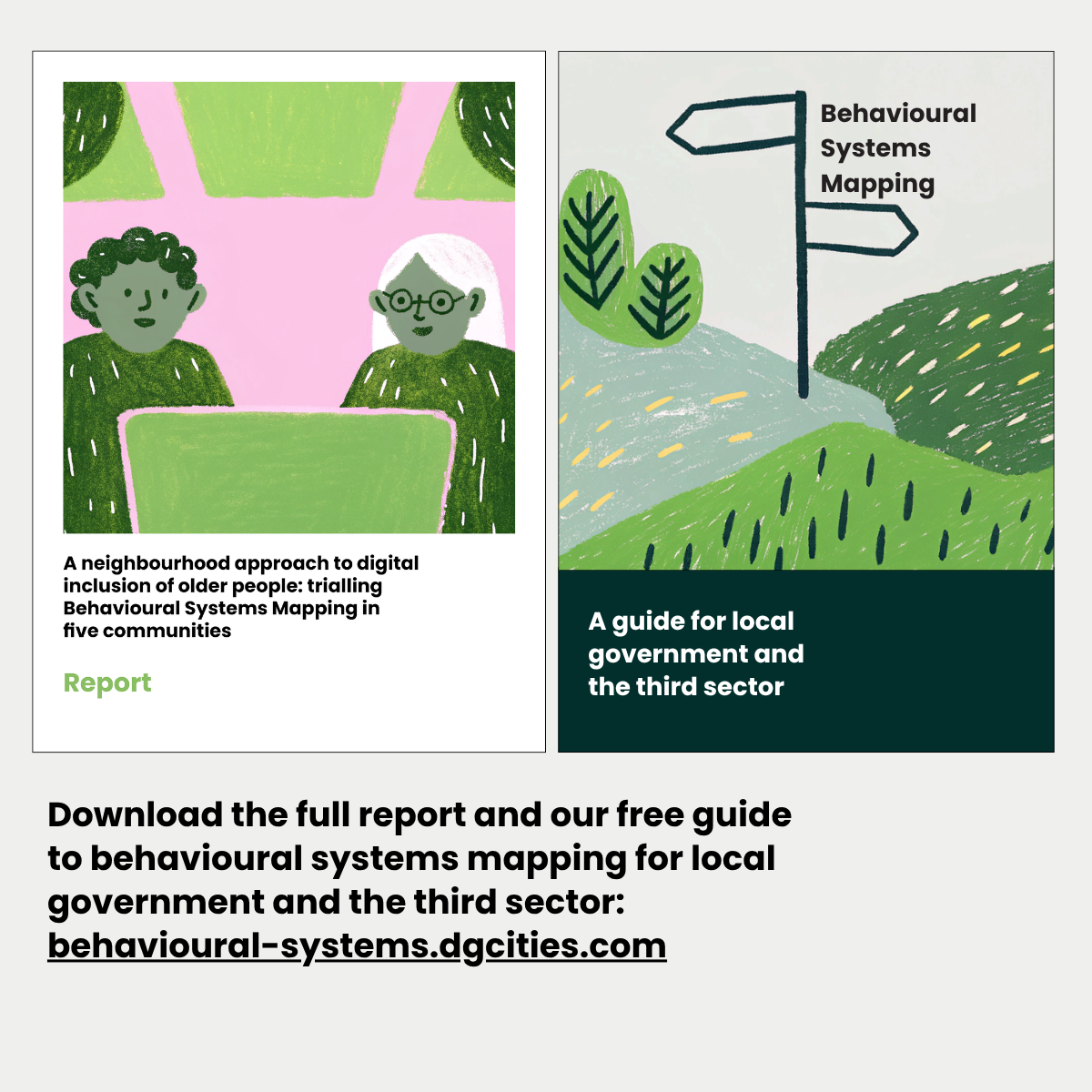
How can behavioural systems mapping help older people get online with confidence?


Funded by DSIT
The DG Cities team worked on an innovative project funded by DSIT (Department for Science, Innovation & Technology) to explore how Behavioural Systems Mapping (BSM) can help councils and community partners design more effective, place-based strategies to improve digital inclusion for older people (aged 60+). Older adults remain one of the UK’s most digitally excluded groups, facing barriers such as low confidence, limited skills, accessibility challenges and lack of trust in technology.
How does it work?
BSM combines insights from behavioural science (understanding why people make certain choices) with systems mapping, which explores how different factors interact within a community. By applying this proven environmental policy tool to digital inclusion for the first time, the project helps local authorities and charities identify root causes, effective intervention points and opportunities for collaboration.

Led by DG Cities on behalf of the Royal Borough of Greenwich, the project brought together councils, voluntary sector organisations and older residents through participatory workshops and training. The approach was trialled in Greenwich, Haringey, Ealing, Leicester, and North East Lincolnshire, each representing diverse local contexts and priorities.