The Home-by-Home Plan
How can local councils prioritise social housing retrofit?
What asset management tools can track damp, mould and EPC ratings simultaneously?
The Home-by-Home plan: an innovative solution transforming housing asset management.
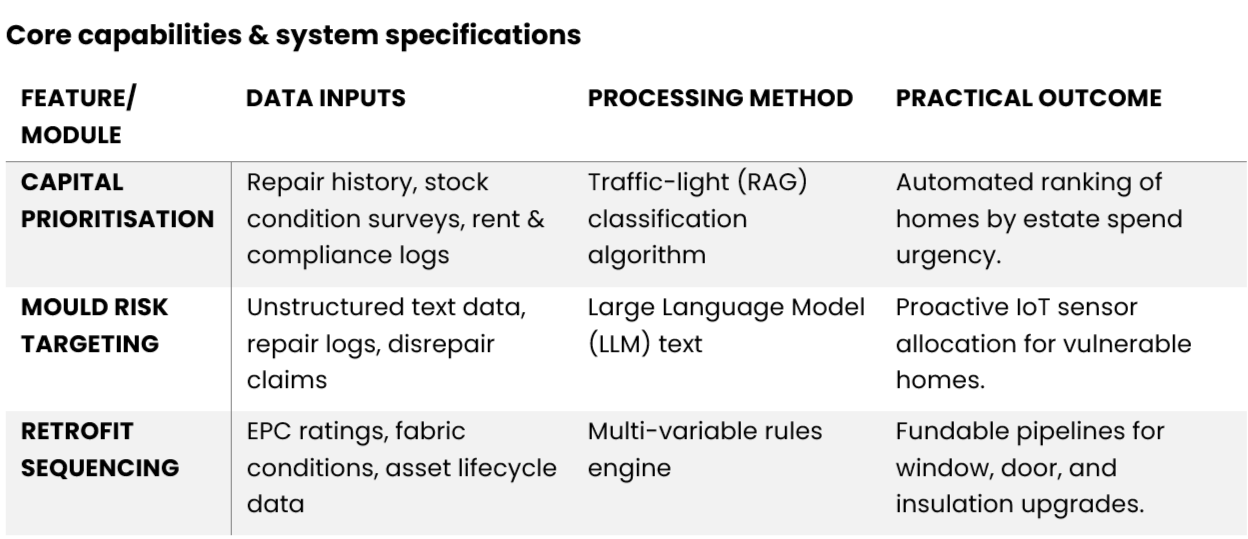
The Home-by-Home Plan is an AI-driven tool developed by DG Cities that aggregates siloed housing records, text-based repair descriptions and EPC data into a single, unified dashboard to optimise social housing investment, target retrofit funding and accelerate decarbonisation targets.
Proven impact in the Royal Borough of Greenwich
The system was fully deployed across ~25,000 social housing properties in the Royal Borough of Greenwich, delivering:
Efficiency: dramatically reduced the investment decision-making timeline.
Scale: analysed hundreds of thousands of unstructured housing feedback loops in real-time.
Resource direction: strategically routed housing investments directly to properties with the highest risk profiles.
Industry recognition: earned Highly Commended at the MJ Achievement Awards 2026 for AI Innovation in Local Government.
Demo
Would you like to find out how to prioritise your housing repairs, deliver improvements and meet your decarbonisation targets? Fill in the form and get in touch for an informal chat or demonstration.

"The Home-by-Home Plan has fundamentally changed how we have conversations about investment. We no longer walk into a programme meeting relying on gut feel or whoever surveyed last. The data is there, it’s consistent, and it gives the whole team confidence that we’re spending in the right places.” — Asset Data Manager, Royal Borough of Greenwich
〰️
"The Home-by-Home Plan has fundamentally changed how we have conversations about investment. We no longer walk into a programme meeting relying on gut feel or whoever surveyed last. The data is there, it’s consistent, and it gives the whole team confidence that we’re spending in the right places.” — Asset Data Manager, Royal Borough of Greenwich 〰️
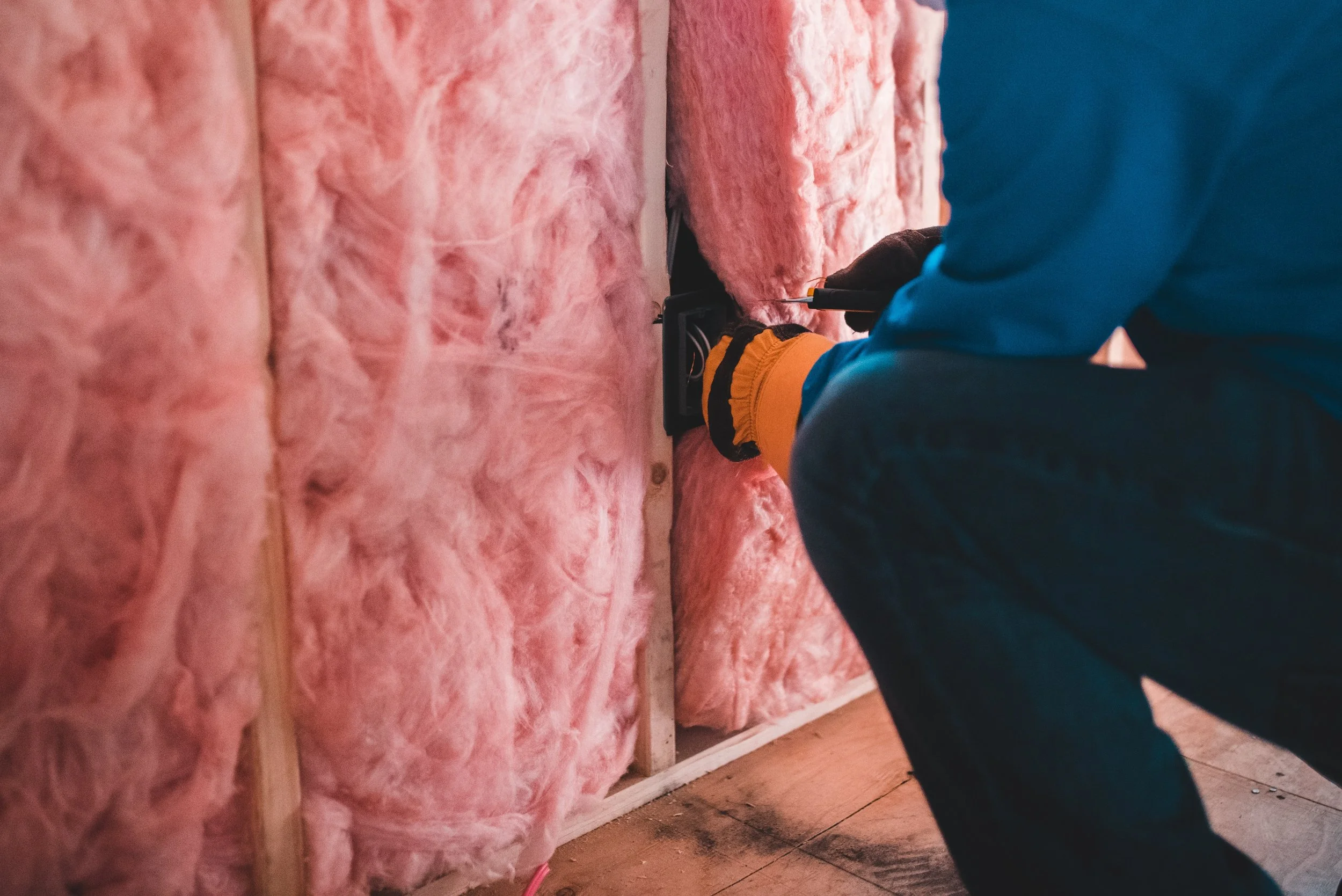
Housing Decarbonisation Consultancy
-
DG Cities and the Bartlett School of Architecture, UCL teamed up on a government study to investigate hard to decarbonise housing. An estimated 10 million homes Britain are difficult to insulate or improve by conventional means.
The project, commissioned by the Department for Business, Energy and Industrial Strategy (BEIS), aimed to identify these homes, define what makes a home ‘hard to treat’ or ‘hard to decarbonise’ (in the context of energy efficiency and low carbon heating), develop a practical framework to help inform policy and guidance to tackle challenging properties. Read more…
-
Should we be reframing the challenge of decarbonising the UK’s homes? Just as post-war necessity prompted a golden age of social housing, can today’s climate emergency lead to more than incremental improvements – could it be the catalyst for wider transformation across housing; the development of new systems, partnerships and technologies, along with growth in retrofit jobs and skills, to change the way social housing is conceived and managed? Read more: Refurb, redevelop or dispose?
-
Read Balazs Csuvar’s piece on a data-led approach to retrofit at scale.
We offer a consultancy service tailored for local authorities, housing associations and private sector owners seeking to tackle the challenge of improving and decarbonising housing stock.
Our work addresses the challenges of complex, ‘hard to treat’ buildings, and explores ways to incorporate technologies such as heat pumps, photovoltaics and tackle issues such as damp and mould.
We act as a trusted innovation partner, bridging the gap between industry and the public sector, and empowering clients to embrace new technologies and behaviour change approaches – our research and experience has shown us that technology alone is not enough to drive change, if residents are not engaged, informed and part of the solution. Our approach is comprehensive, providing a clear roadmap, from strategy development to delivery and evaluation.