
What better way to counter January’s ‘blue Monday’ than with some thoughtful reading? And it just so happens we’ve published our new ‘notes’ on Substack.
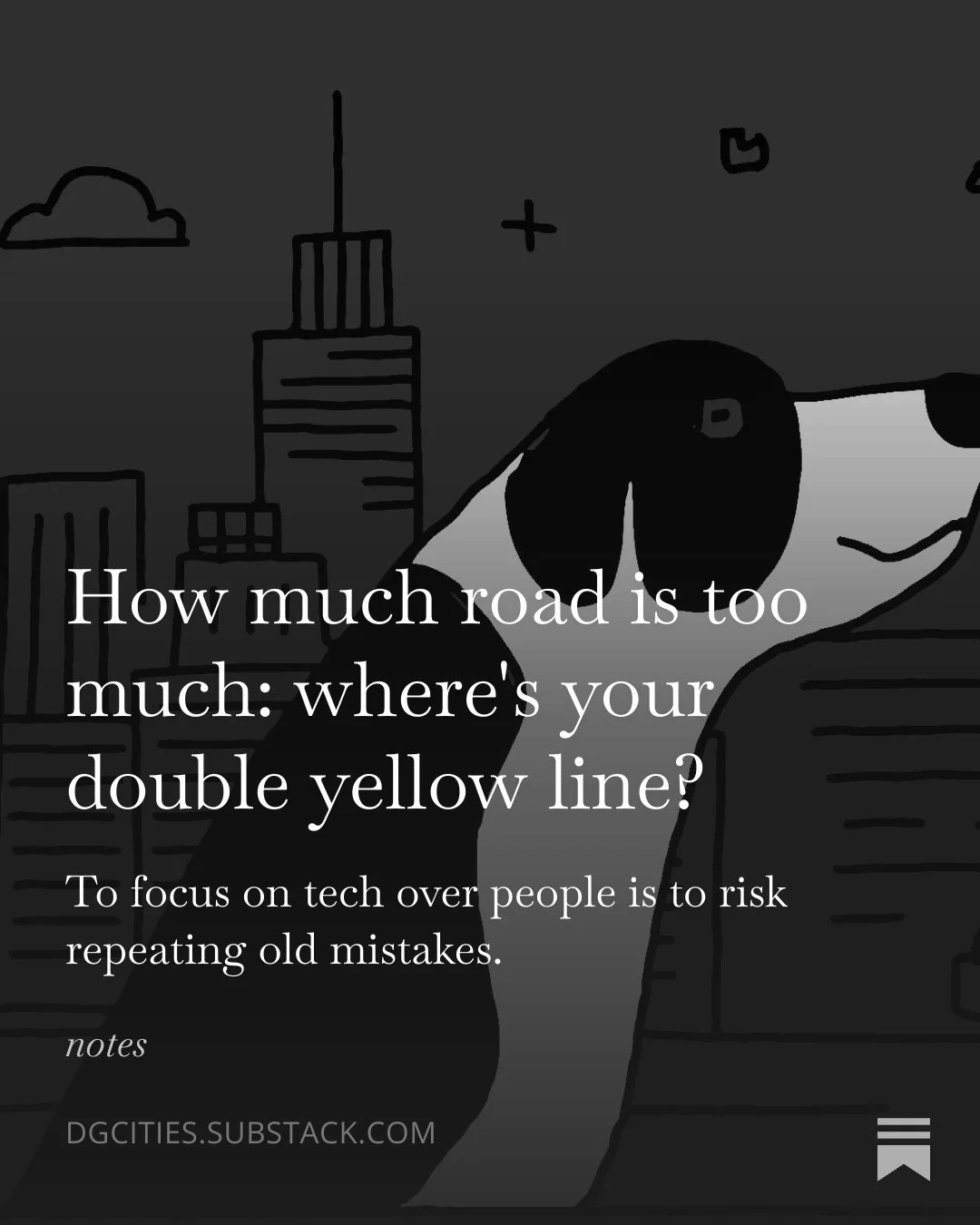
Four our first piece (How much road is too much: where’s your double yellow line?) we’re considering the impact of cars on cities and how the balance is negotiated. For us, the real question isn’t just spatial but connected to people’s values and identity. How much public space do you think should be given over to vehicles versus people?
Objective analysis of survey and usage information isn’t always heard. For example, data from London’s Low Traffic Neighbourhoods has shown a reduction in traffic and increase in active travel, countering many common fears, but national culture wars and social media have often been cited to distort and politicise local debates. In our projects, we’re exploring how behavioural systems mapping can help us understand the wider reasons why, for example, people choose to drive, walk or cycle - and from this finding useful insights to guide policy and deliver positive change.
Looking forward, emerging technologies such as autonomous vehicles will raise further questions about who gets to use our streets and for what purpose, with further ethical questions raised around the decisions made by the technology itself. Unless human experience remains central, cities risk repeating past mistakes of designing around cars rather than around people. Read more: dgcities.substack.com
We have started this as an experiment; a way to explore some of the issues around our projects and show a little more of our workings out. We set up these notes as a space for thinking beyond the DG Cities team’s day-to-day work and inviting new perspectives and authors. There’s a lot going on in our Slack channels, studio chats and team lunches that we’d like to make sure we don’t miss.
We hope to share more of the thoughts, experiments and wider context around our projects. We want to delve a little more into the wider issues shaping our neighbourhoods and cities, from behavioural science research to housing innovation to advances in self-driving and the points where tech meets real people and their needs.