How public workshops helped to shape policy: the Statement of Safety Principles for automated vehicles.

Funded by the Department for Transport
The DG Cities team, in partnership with Reed Mobility and DJS Research, was commissioned by the Department for Transport (DfT) to deliver national public research exploring public perceptions of safety standards for automated vehicles. The findings directly informed government policy and the formulation of the UK’s 10 national Statement of Safety Principles under the Automated Vehicles Act, published in 2026.
The research
To bridge the gap between technical safety metrics and public expectations, DG Cities delivered a series of deliberative research workshops across Great Britain (spanning rural, semi-urban, and urban locations). Rather than relying on static surveys, the deliberative methodology allowed a diverse cross-section of the public—including drivers, non-drivers, and vulnerable road users—to develop a deep understanding of AV capabilities and evaluate how safety should be benchmarked against existing road standards.
The research critically evaluated the benchmark of a "careful and competent" human driver (as referenced in the Automated Vehicle Act 2024), uncovering that the public views this term as ambiguous. Instead, participants demanded clear, objective, and measurable performance standards, leading the DfT to evolve the benchmark into a more precise definition: "sufficiently representative of GB drivers who are unimpaired, not distracted and follow traffic rules."
Key outcomes
The public’s insights directly shaped the DfT's 10 Safety Principles for Automated Vehicles:
Rule compliance & control: The public identified adherence to traffic laws as a foundational metric for safe driving, shaping principles mandating Highway Code compliance and continuous vehicle control.
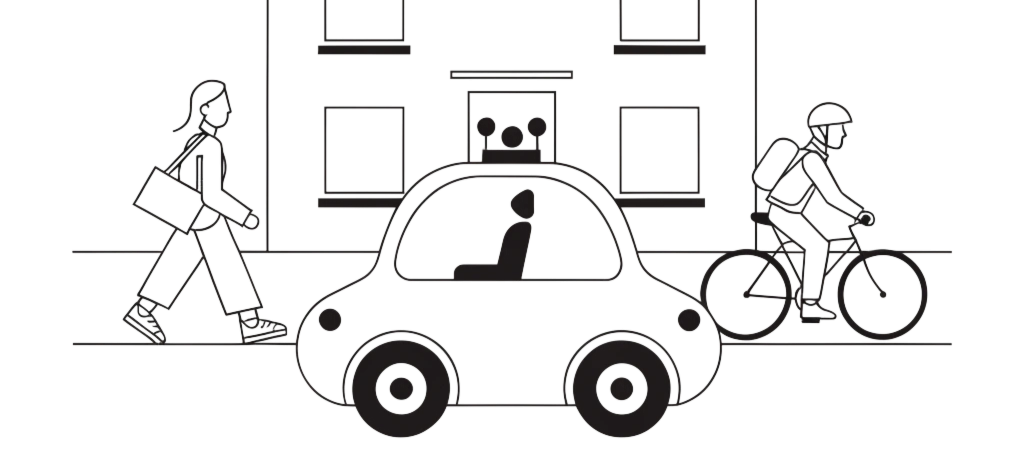
Proactive hazard anticipation: Workshop participants highlighted that safe AVs must go beyond reactive braking, expecting a form of ‘technological intuition’ to predict hazards and protect vulnerable road users.
Context & geography: Rural participants emphasised the need for adaptation to speed and weather, while urban participants focused on pedestrian interaction. This supported defining AV capabilities through strict Operational Design Domains (ODDs) and local representative testing data rather than relying solely on international claims.
Predictability & trust: Participants called for clear visual communication of a vehicle’s intent to build trust among passengers, pedestrians and other road users.
Why public deliberation matters
Safety on public roads is a collective concern. Defining acceptable safety standards for autonomous technology cannot be undertaken by policymakers or industry experts alone. By placing public voices at the heart of policy design, the project demonstrated how deliberative engagement builds public trust, refines regulatory language and ensures emerging mobility solutions reflect real-world user expectations.