
Following the passage of the UK Government’s Automated Vehicles Act in 2024, we’re expecting to see the first commercial self-driving taxis launched in London by the end of next year. To better understand what's happening now, Nick Reed takes us back to the deck of an automated shuttle on the Greenwich Peninsula on a cold morning in 2015. For our latest guest piece, the leader in transport innovation, founder of Reed Mobility and long-term DG Cities’ collaborator shares his perspective on a decade of self-driving advances in Greenwich.
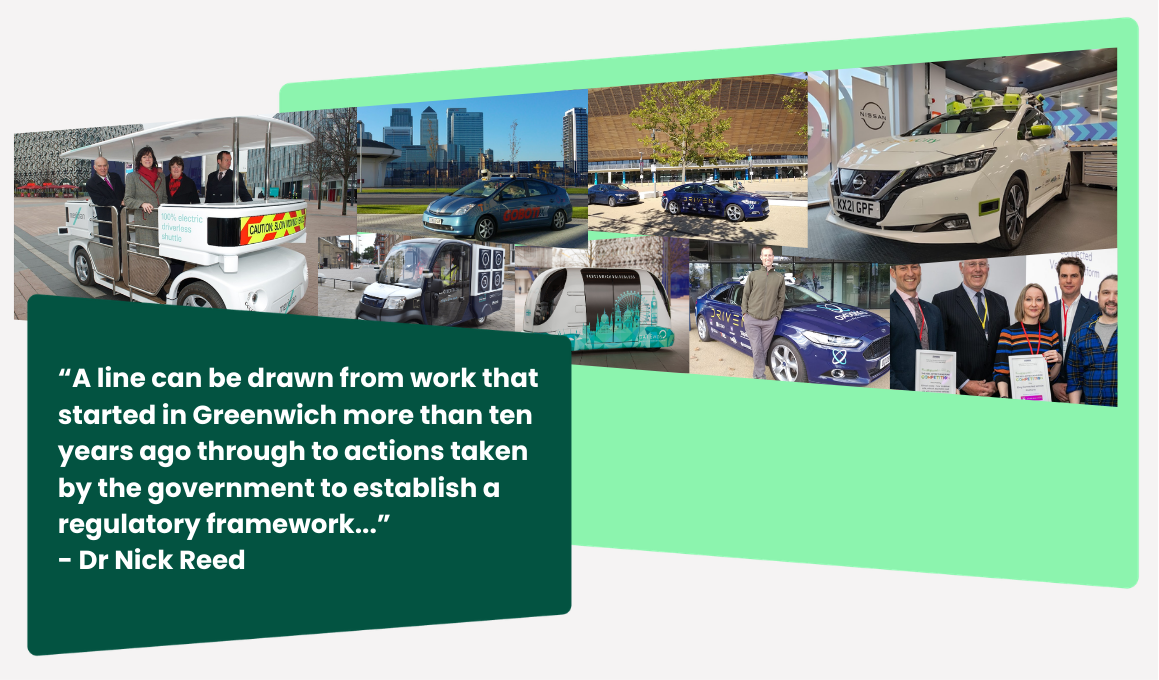
I vividly remember the first meeting in 2014. The Department for Transport had just announced funding for projects to trial automated vehicles on UK streets, and as a director at TRL (the UK’s Transport Research Laboratory) and lead of research in this area, I was keen that we bid. However, one key question needed an answer - which streets should we choose? A colleague had connections to the Royal Borough of Greenwich and arranged the call…
With the TRL team huddled around a speakerphone in a nondescript meeting room, it was immediately apparent that our new friends from Greenwich were ready to go ‘all in’ as project partners. They recognised the need for and value of the technology, they shared our vision for what could be achieved and they had the energy, leadership, connections and political support to make it happen. Thus began the GATEway project.
The name ‘GATEway’ was deliberately capitalised as an abbreviation of Greenwich Automated Transport Environment. This highlighted our ambition that the project should not simply run a series of trials and then end, but should create something that would live beyond its conclusion - a ‘gateway’ to a future of safe, clean, accessible mobility enabled by automated vehicles. In striving for this future, we also wanted to reflect the present transport challenges that Greenwich faced and the past in which Greenwich was established as the global focus for navigation. The funding assessors at Innovate UK shared our vision and gave the project the green light.
The launch event, on a freezing February morning in 2015, saw the world’s press gather to see the automated vehicles assembled outside the O2 Arena. The various breakfast news teams jostled for position to get the best shots of the assembled vehicles and the media clamour persisted throughout the day. Colleagues from Greenwich suggested that interest in the launch exceeded that they had experienced when hosting Olympic and Paralympic events across three venues in the borough three years earlier.
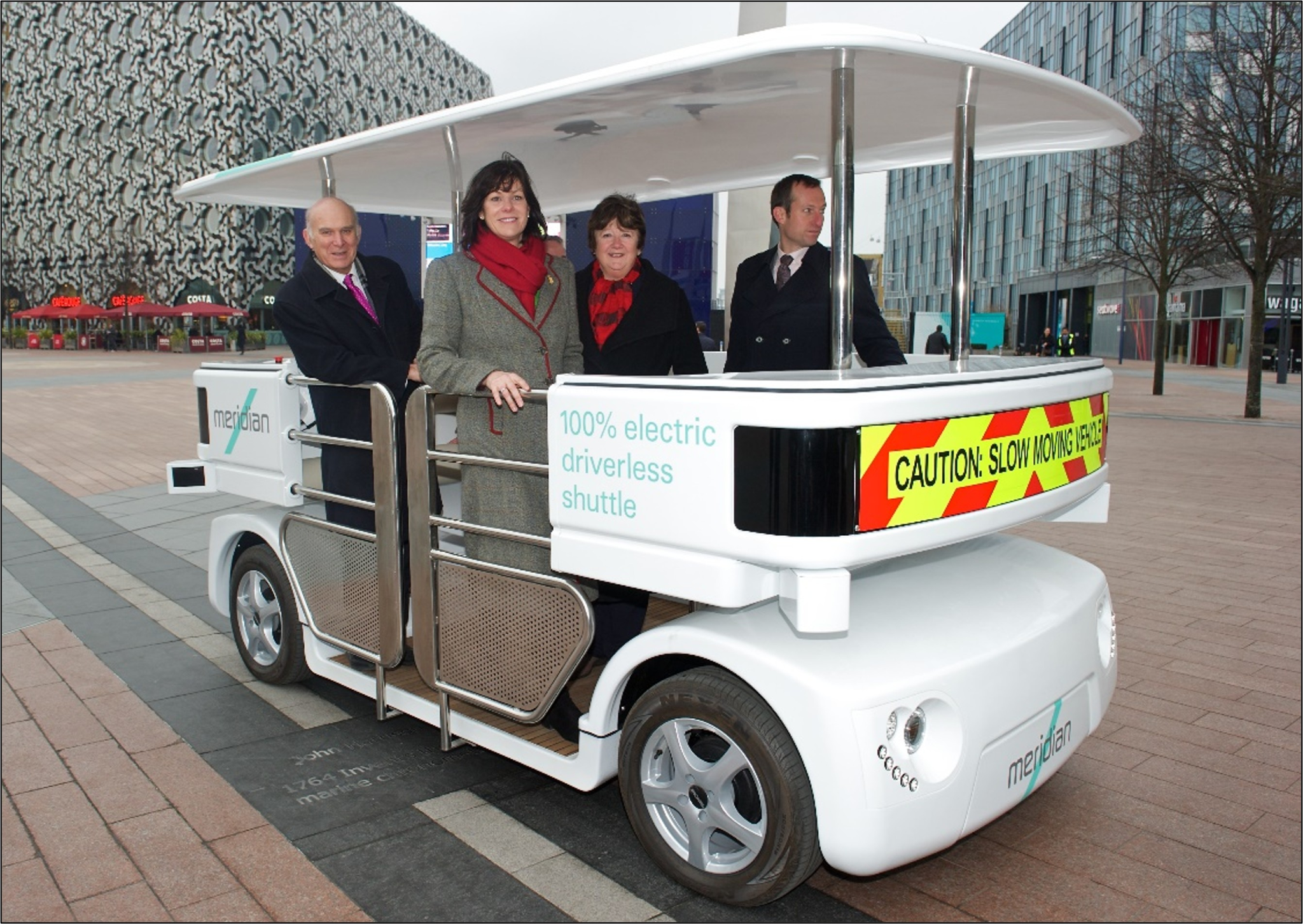
(L-R) Business Secretary, Vince Cable; Transport Minister Claire Perry; Leader of the Royal Borough of Greenwich, Denise Hyland and GATEway project lead, Dr Nick Reed on the early GATEway shuttle prototype (picture courtesy of TRL).
Following the successful launch, working closely with partners including leading insurers, RSA, mobile network provider, Telefonica and with academic support from the Royal College of Art, the University of Greenwich and Imperial College, and DG Cities, Greenwich Council’s independent innovation company, GATEway saw multiple automated vehicle types trialled in the borough.
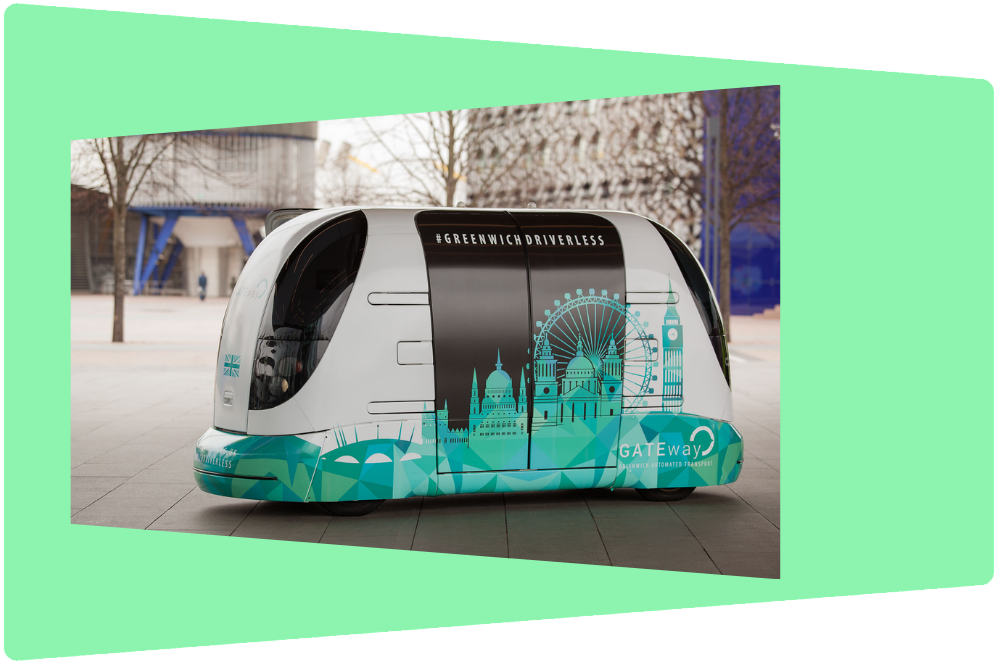
The GATEway shuttle vehicle that offered rides to passengers on the Thames path near the O2 Arena (picture courtesy of TRL).
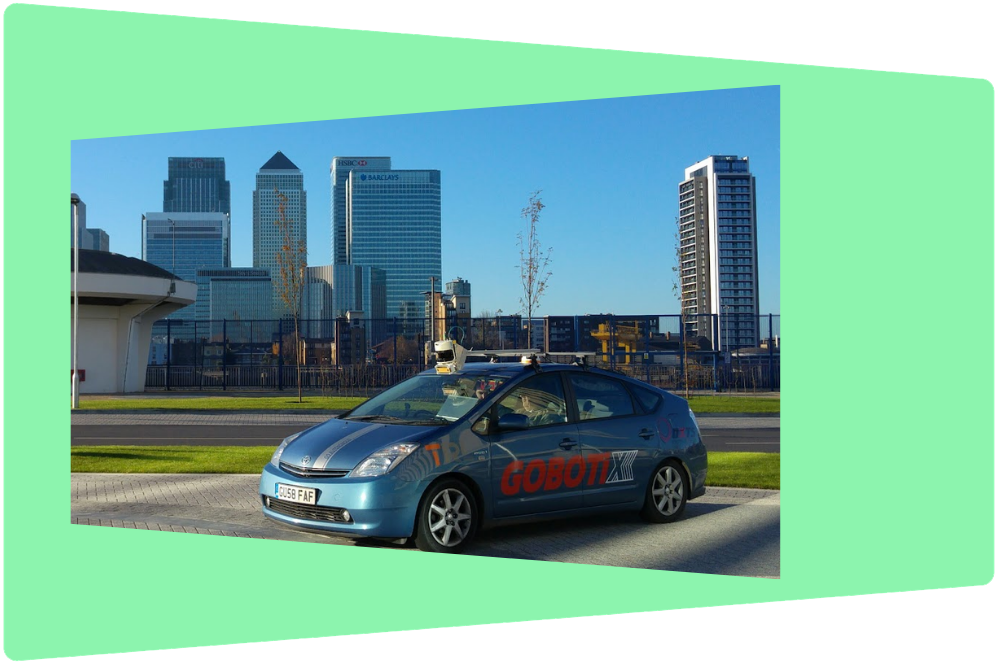
The GATEway teleoperated vehicle tested at the InterContinental hotel on the Greenwich peninsula (picture courtesy of TRL).
These included a passenger shuttle operating on the Thames path near the O2 Arena, a vehicle capable of being driven from a remote control centre situated in the brand new InterContinental hotel on the Greenwich peninsula and the world’s first grocery delivery by automated vehicle at the Royal Arsenal heritage site.
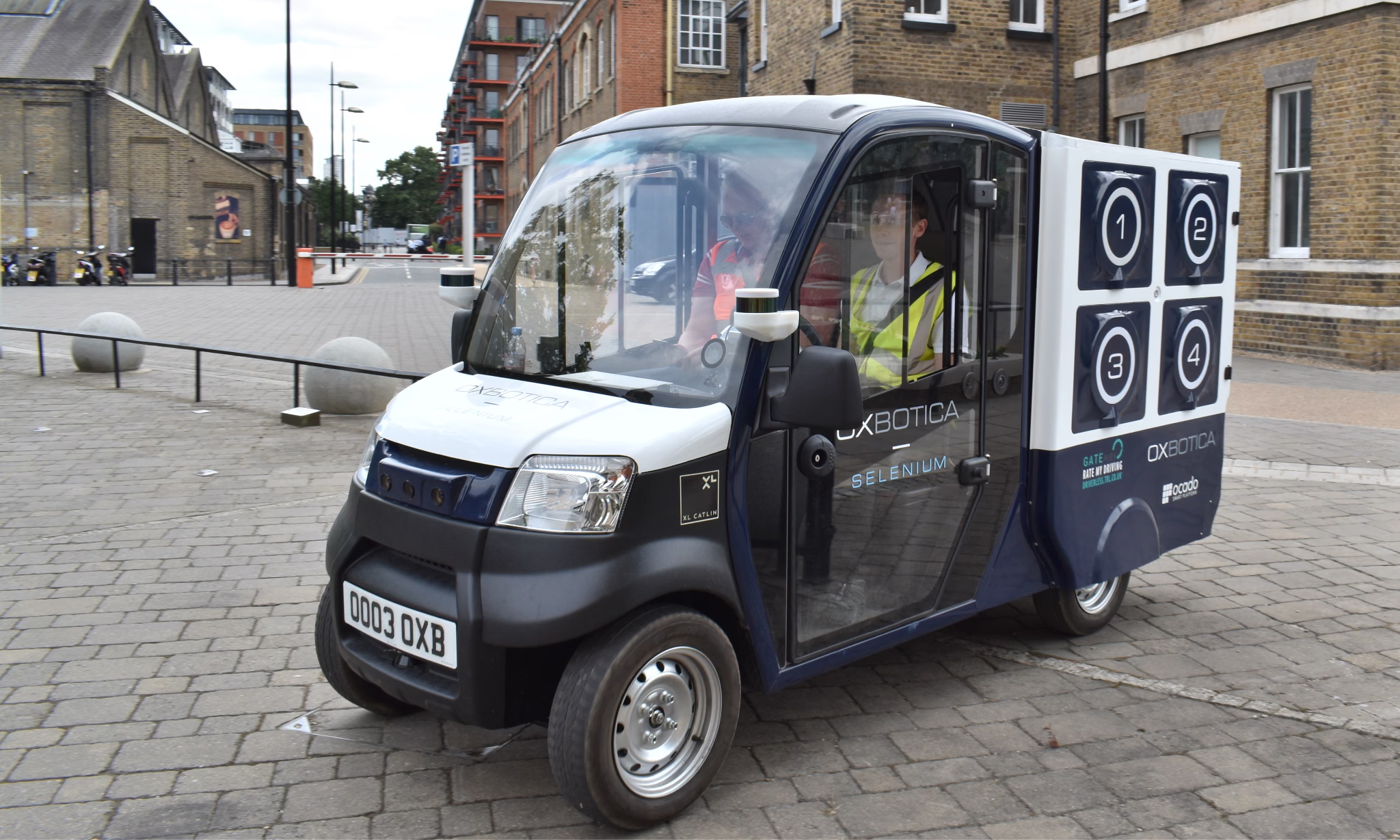
The GATEway automated delivery vehicle that completed the world’s first grocery deliveries (in partnership with Ocado) by automated vehicle on the Royal Arsenal heritage site (picture courtesy of TRL).
The shuttle and delivery vehicle used automated driving technology from a spinout company from the University of Oxford called ‘Oxbotica’. Now shortened to Oxa, this company has since raised hundreds of millions in funding and grown to hundreds of employees through the development of automated driving technology. Similarly, automated driving technology company, Fusion Processing supported later iterations of the GATEway shuttle and has since participated in a project called CAVForth in which the UK's first full-sized automated bus service was trialled in Scotland.
In parallel with GATEway, the Royal Borough of Greenwich announced its own radical shift. Its innovation activities would be focused in a new entity, christened ‘DG Cities’. This team could work on ground-breaking ideas that could transform services within the borough, while also sharing the learning from Greenwich with cities across the UK and internationally.
As GATEway progressed, the vision of an enduring facility to support future transport was realised by TRL and DG Cities in the form of the ‘Smart Mobility Living Lab’. This meant the Royal Borough of Greenwich’s streets could develop, trial and evaluate new forms of transport innovation for development and evaluation, from self-driving vehicles to e-cargo bikes. The concept captured the zeitgeist and won ITS UK’s Forward Thinking award for 2016, recognised as a ‘pioneering, real-life environment for testing connected and autonomous vehicles within a live urban community in London’.
Initially conceptual, the Smart Mobility Living Lab (SMLL) became a serious proposition when the government announced it was funding the development of facilities to support the growth of the UK’s automated vehicles industry. As a recipient of a significant portion of these funds, SMLL took root in a dedicated space in Woolwich offering incredible communications, monitoring, engineering and workshop facilities and office space to support mobility innovation in the borough.
The SMLL proposition was further enhanced by a partnership with the Queen Elizabeth Olympic Park across the river, which offered private roads that could be more easily configured for R&D. An early success included the Driven project. Led by Oxbotica, this trialled automated vehicles on the Olympic Park site before venturing beyond onto the public streets in London and Oxford.
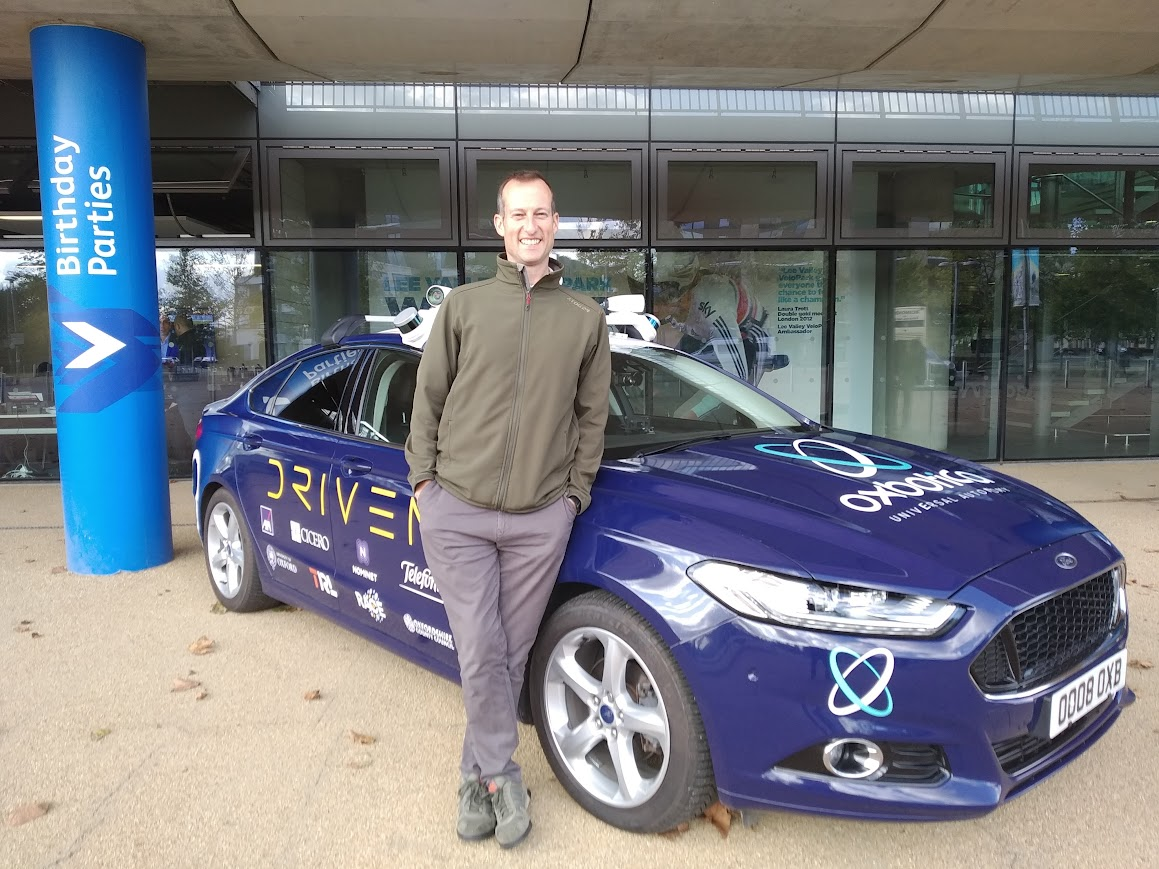
Dr Nick Reed visiting an automated vehicle from the Driven project at the Queen Elizabeth Olympic Park.
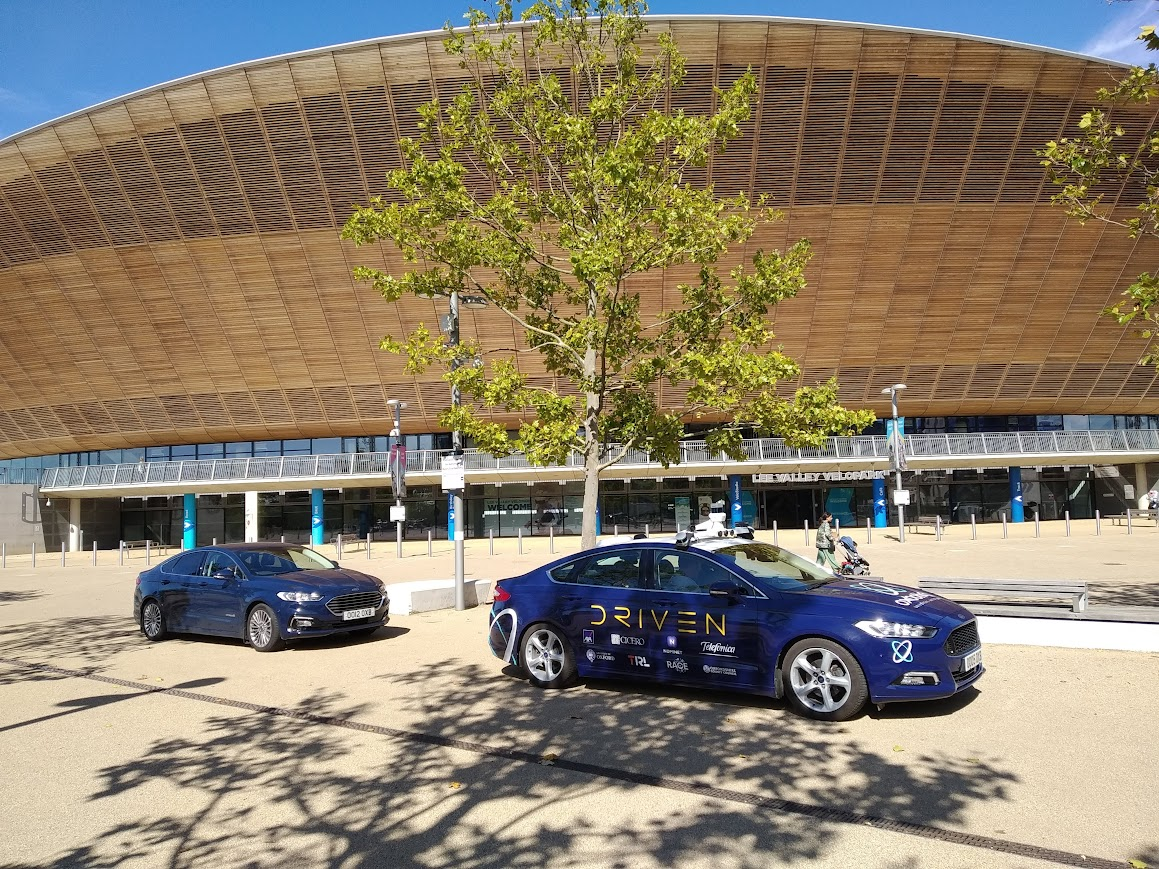
Automated vehicle from the Driven project outside the Lea Valley Velopark, part of the Queen Elizabeth Olympic Park in London.
It was around this time that I began two years working for Bosch, heading up mobility R&D and helping to determine how their hugely successful business in supplying technology to the automotive sector could play a role in improving mobility for cities. This included supporting our team in the creation of the Bosch London Connectory - a unique collaborative, co-innovation space delivered in partnership with Transport for London and designed to support cooperation between industry leaders, SMEs, academia and the public sector in tackling the city’s mobility challenges. However, I had decided that it was time to start out on my own and, in 2019, started Reed Mobility as a consultancy to support the development of transport systems that are safe, clean, efficient, ethical and equitable.
Building on the success of Driven, the Oxbotica-led, Endeavour project extended the research scope by using rides in automated vehicles to explore how members of the public felt about trusting the technology to operate safely on public roads. As consortium partners, this societal aspect fell squarely into the experience of the DG Cities team, running surveys, focus groups and interviews to explore perceptions and attitudes towards automated vehicles. DG Cities also developed tools to help public sector stakeholders understand how they might engage with automated vehicles and determine whether they might bring value to their locations.
SMLL has also hosted work to support the development of automated driving systems by Nissan. They worked with an array of partners including DG Cities to explore how their self-driving systems would respond in a complex urban environment with a very different culture of road use. Nissan’s trials also explored how their automated vehicles could use information provided by infrastructure-based sensors to inform future driving behaviours - in this case, information about the status of a downstream traffic lane ahead was communicated upstream to the self-driving vehicle, helping it to select the most appropriate lane to complete its journey safely and efficiently.
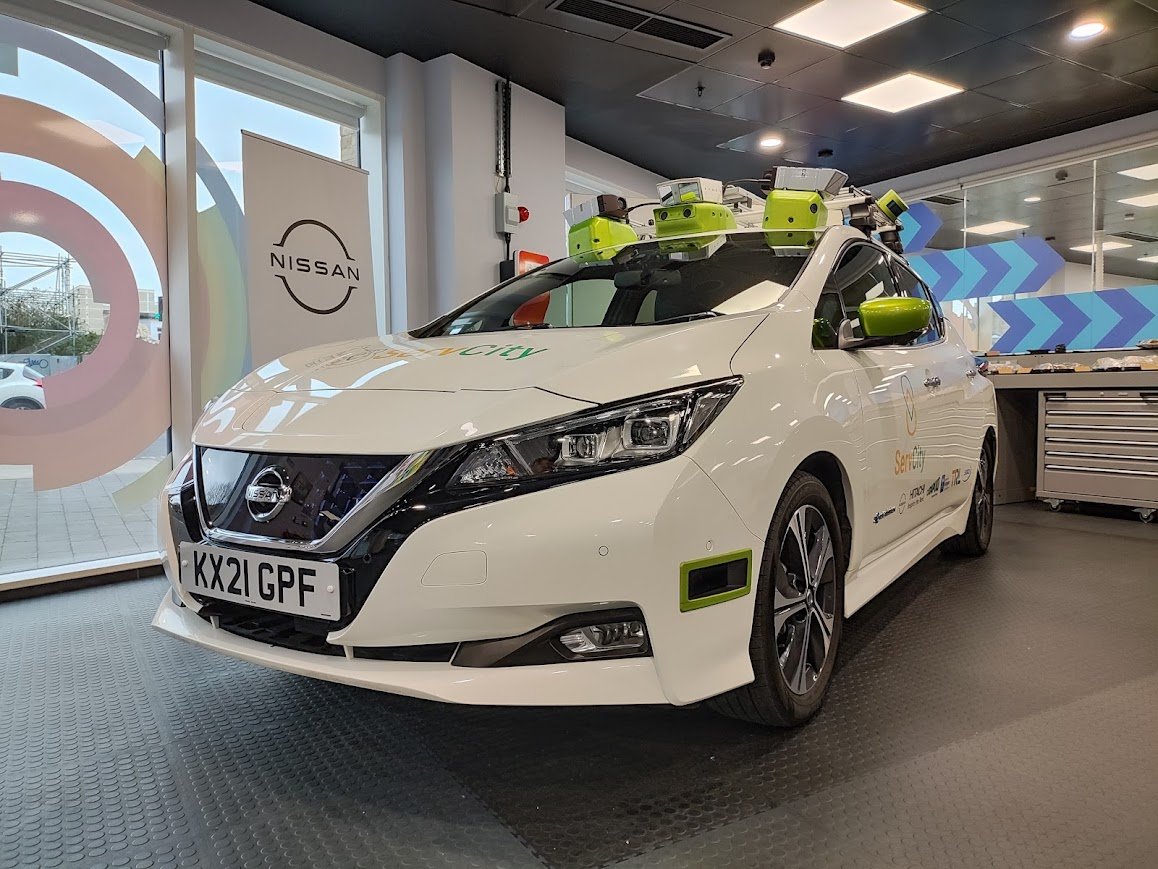
Self-driving Nissan Leaf used in the ServCity project and tested in SMLL.
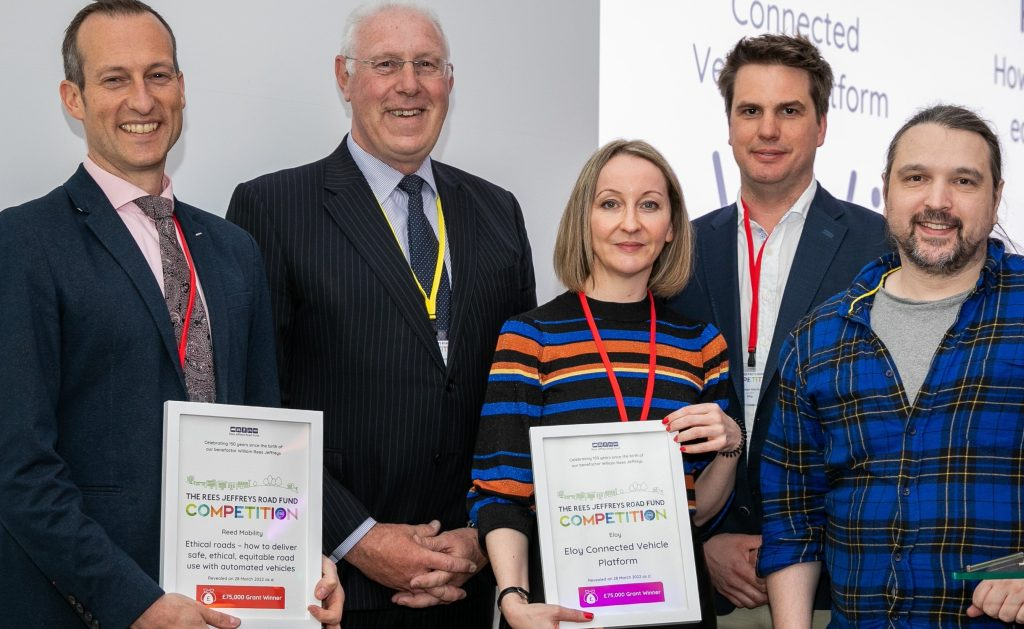
Winning the Rees Jeffreys Road Fund competition to investigate the ethics of self-driving vehicles in Greenwich (picture courtesy of Rees Jeffreys Road Fund).
In 2022, the Rees Jeffreys Road Fund ran a special competition to commemorate 150 years since the birth of its namesake - the roads advocate, William Rees Jeffreys. This sought ideas for projects setting out a vision for how roads could meet the challenges of the next 50 years. A joint winner of this competition was an entry by Reed Mobility entitled ‘Ethical Roads - how to deliver safe, ethical, equitable road use with automated vehicles’. Working in partnership with DG Cities and SMLL, this project used a survey and workshops to determine what members of the public considered to be their ethical ‘red-lines’ - behaviours that absolutely must (or must not) be adopted by self-driving vehicles in order for their behaviour to be considered acceptable.
A line can be drawn from this programme of work that started in Greenwich more than ten years ago through to actions taken by the government to establish a regulatory framework to support the commercial deployment of automated vehicles. Following several consultations by the Law Commission, the Automated Vehicles Act was passed in May 2024, giving greater certainty and confidence to the industry that the UK is the right environment for this technology to reach commercial readiness and deliver societal benefit. This has attracted global leaders in self-driving technology such as Waymo, Wayve and Baidu to announce pilots of self-driving vehicle services to begin in London this year - reinforcing the value that the research in Greenwich has delivered.
In 1884, Greenwich was established as the prime meridian and as such became the global reference point for the measurement of time. However, the significance of this decision extended far beyond navigation and cartography. By providing a common reference for time, it enabled the coordination of railways, shipping and telecommunications and later helped underpin technologies such as satellite navigation and global digital networks. In effect, the standardisation of time created the foundations on which many of the complex, interconnected systems of modern life depend.
In much the same way, today’s efforts to develop and deploy automated and connected mobility systems rely on shared frameworks, trusted data and careful coordination between technology, infrastructure and public policy. The work undertaken in Greenwich and that led by DG Cities reflects a similar spirit – working to ensure that new mobility technologies realise the bright future that they promise to deliver. For more than a decade, the borough has provided a real-world testbed for ideas that may define the future of urban mobility. Greenwich helped the world measure time; it continues to shape the way we move through it.
With thanks to Dr Nick Reed of Reed Mobility. You can read more about DG Cities public research supporting the development of safe, ethical services here.