
For a council, how much will the spike in fuel prices affect the running costs of diesel bin lorries? Travel expense claims? Heating bills? As net zero ambitions take on a pragmatic dimension, we’re looking at some of the ways DG Cities has helped different councils trial innovations, grow resilience and harness the potential of new technology to make the shift to electrification and renewables.

The impacts of geopolitical instability will be felt at a local level. In homes that need heating, in transport costs, in businesses where energy is consumed, in consumer prices, housebuilding programmes – all areas where local authority budgets are already stretched to their limit.
Will the spike in fuel prices drive a more rapid than expected shift to electric cars – and are there enough charging points in your area to cope with demand? To what extent have you successfully decarbonised your council fleet? How are you using evaluation to maximise the returns on your Warm Homes-funded projects? At DG Cities, we play an important role in helping places trial, validate and scale renewable energy solutions in real-world settings. We help to turn abstract ideas into useful, scalable systems and then bring the behavioural and social understanding that will make them work.
We thought we’d take a look at some of the areas and projects where local authorities, often with industry partners, have been leading the way.
Fleet electrification
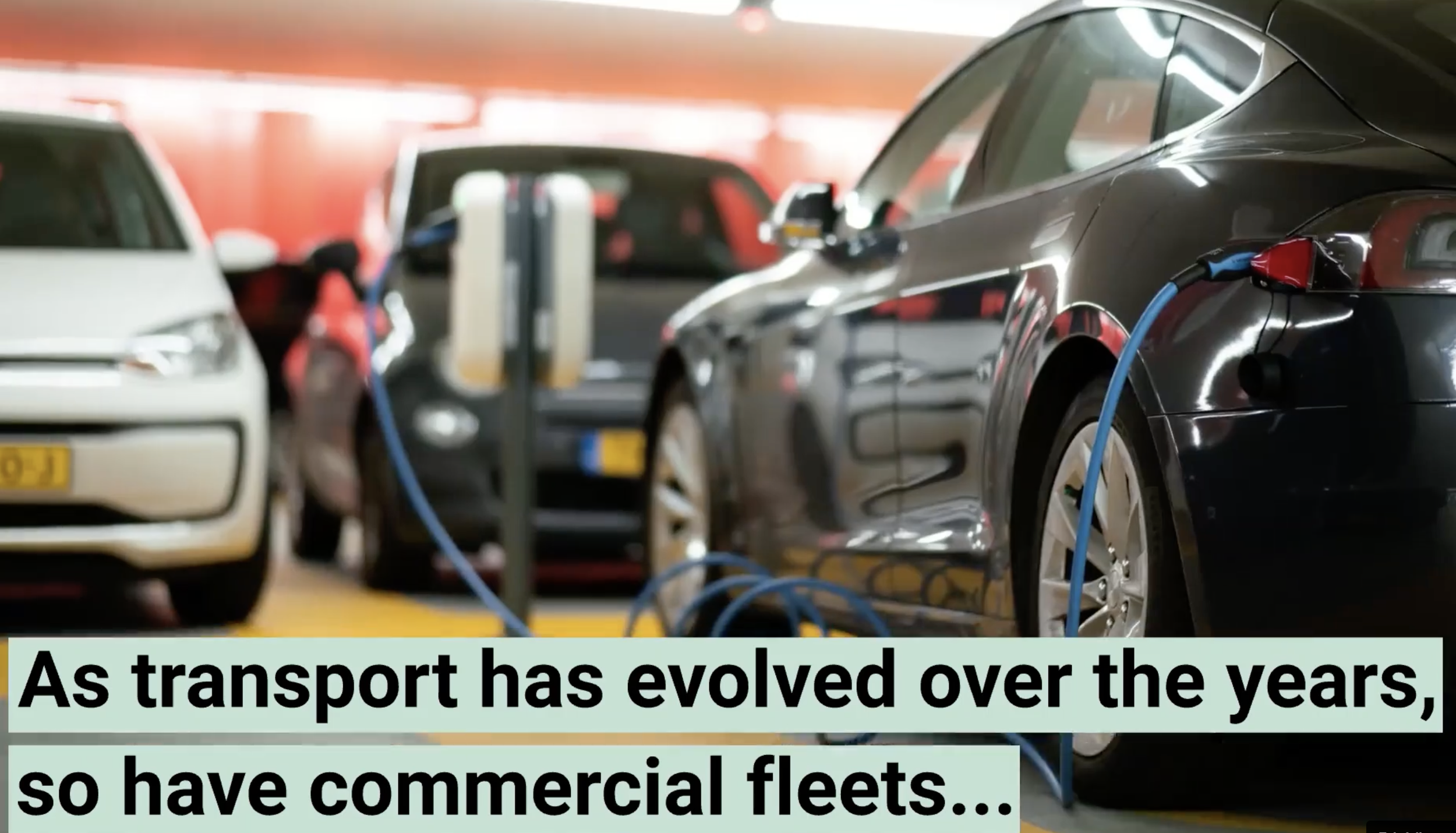
DG Cities worked with a council to develop a costed, operationally viable strategy for fully electrifying its 500+ vehicle fleet by combining fleet, depot and usage analysis with stakeholder engagement. We assessed different scenarios: a high-cost, high-convenience model with dedicated chargers for every vehicle at main depots and two lower-cost alternatives using shared chargers, home charging, battery storage and solar integration.
By analysing telematics, mileage patterns and replacement cycles, we determined the council fleet’s charging needs, infrastructure requirements and phased vehicle replacement costs. Our depot surveys and electrical upgrade assessments then enabled full capital and operational cost estimates. Ash Dowler explains the steps in this process and you can watch our film for more on this strand of work.
Equitable access to EV charging
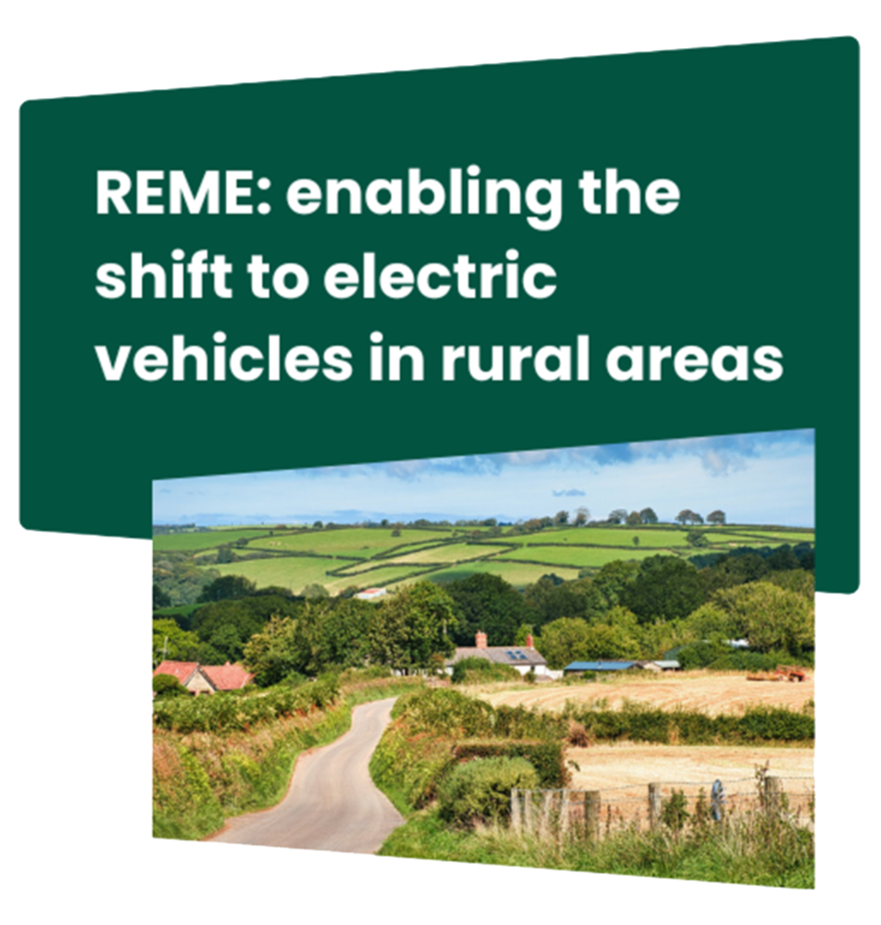
As uptake of electric vehicles grows, councils need to manage the provision of EV charging. What makes a local authority’s EV charging network resilient? (Diversity, grid capacity, accessibility and more…) What are the implications for rural areas? (Our REME research looked at how adoption can be supported in the countryside.)
As with many areas of our work, there’s also the challenge of understanding the public’s perception of a technology in order to shift behaviour. The Department for Business, Energy and Industrial Strategy (BEIS), as it was then called, asked DG Cities to conduct a national survey into people’s views and understanding of EV chargers. The results shed light not only on consumer attitudes, but also on areas where improvements are needed if EV adoption is to be accelerated.
Understanding complex housing
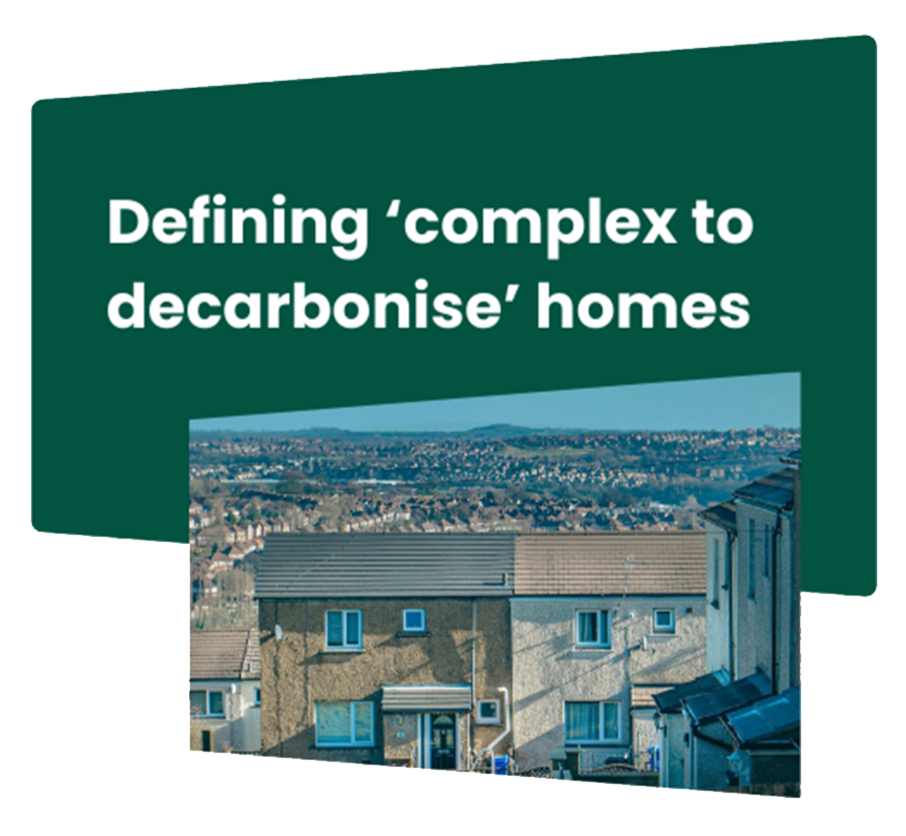
When it comes to housing decarbonisation, a substantial challenge is dealing with complexity, when no two homes, residents or neighbourhoods are the same. Our ‘complex to decarbonise’ housing research for the UK government with UCL developed a new definition and framework to identify homes that are particularly difficult to retrofit and decarbonise.
Recognising that around 10 million UK homes can’t be improved through conventional measures, the work helped move beyond a one-size-fits-all approach by assessing a combination of physical, technical and social factors that create barriers to low-carbon upgrades. This was one of the conversations that inspired the development of our ‘home by home’ plan, which uses data and AI to help councils better manage their complex housing assets, anticipate issues and track repairs and retrofit programmes.
Changing the way we heat
Heating represents one of the most complex energy challenges for local authorities. Our research into heat pumps back in 2022 highlighted the scale of the transition required: while the technology is central to national decarbonisation strategies, when we surveyed 500 people, we found public understanding was limited and upfront costs were a major barrier to adoption. Using evidence on consumer attitudes and practical barriers, we can help councils design interventions, whether demonstration homes or financing mechanisms, that make adoption more feasible at a household level.
District heating
At a systems level, this work points to a new generation of district heating networks. With Kensa, we explored the potential of a heat pump network. Read more here on how this approach could improve efficiency while enabling the use of ambient and renewable heat sources.
Solar power
We also explored the potential of solar renewables. IDEMA was an Innovate UK–funded feasibility study set up to explore how low-carbon technologies and modern methods of construction could be integrated into small-scale residential developments. Building on this experience, we helped a local authority develop a business case to expand access to energy generated from existing roof-mounted solar panels on an estate. While some buildings already host photovoltaic systems, the proposed model would have enabled residents to share locally generated electricity, reducing household energy costs.
However, this work in particular highlighted how the challenge extends beyond installing renewable tech. It showed the need for viable local energy systems to fully address governance, billing and resident participation, as although initial interest was clear, uptake fell short of the threshold required to proceed.
What can we learn from success and best practice elsewhere?
This was the question asked by the Sharing Cities programme, which DG Cities was part of. The programme explored a suite of low-carbon interventions, from housing retrofit to smart energy systems and proposals for a water-source heat pump network. The aim was to learn from examples in European cities to demonstrate how technologies could be applied at a neighbourhood scale.
From EV charging to electric bin lorries, home heating to experimental solar, what links all these strands of work is place-based experimentation. We work with government and the private sector to test and develop what works in specific local contexts: we generate data, we evaluate and we iterate. We know that energy resilience can’t be delivered by top-down policy. It requires local government to coordinate infrastructure, engage communities and de-risk new models through pilot projects. This is where we can bring the analytical capability, strategic and delivery support to bridge the gap between ambition and implementation.