
We’re getting ready to launch some exciting new multi-council research - it offers lessons that could improve the lives of millions of older people across the UK. Before we do, we wanted to set the scene with a look at the context. When did the digital divide turn into digital exclusion? How is that challenge evolving next? And does typical usage data really tell the whole story about how older people are using technology?
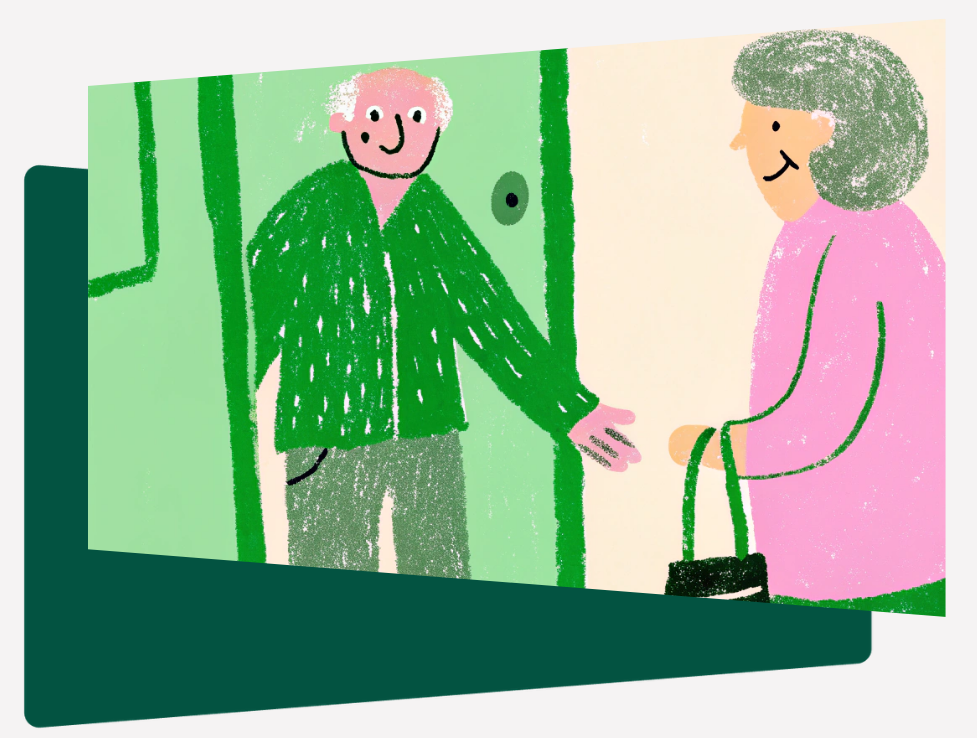
When people started buying televisions in the 1950s, of course, they were expensive. If you were flush enough to own one, it often ended up being communal; your neighbours might gather around it to watch news or major events, such as Queen Elizabeth’s coronation in 1953. This is something my father remembers and it’s interesting, because a similar situation is playing out around online access in his neighbourhood today.
My dad, now in his 80s, has always been an ‘early adopter’ of technology, from his (mostly signal-less) car phone in the 1980s to the company computer he invested in (which took up a whole room to deliver an astonishing processing power of 35k). So, while my parents have become less physically mobile, they have been able to benefit from online services, such as grocery deliveries to the door. They were confident using devices and different apps to stay in touch with family while isolating during the Covid-19 pandemic.
However, like the television buyer in the 1950s, it appears they have become a hyper-local hub. I discovered that when they book their weekly online supermarket order, they add extra groceries for an elderly neighbour, who doesn’t have a laptop or smartphone, but gives them a shopping list. They also access online services to support another relative that isn’t able to use the internet.

It’s not an ideal solution perhaps, but if you surveyed their local situation, in pure data terms you would likely have an incomplete picture. Of three households, two would be classed ‘digitally excluded’, with no broadband, limited IT skills or devices, yet there are hidden social systems at work that enable them to access services. The story that emerges through mapping these systems, the specific barriers, behaviours and even the role of the ‘trusted local actor’ is particularly relevant to DG Cities recent work on digital inclusion.
The digital divide deepens as it appears to narrow
Data alone doesn’t lend itself to easy explanations as to why, despite widening access to devices and training, many older adults are still offline. While absolute numbers of non-users are dropping, according to Age UK research, 2.3 million people aged 65+ (1 in 6) still do not use the internet. Over 4.7 million people aged over 60 lack the fundamental skills to navigate the web safely. This is a vital issue, as more essential services, from medical prescriptions to bus passes, move online – the impact on those excluded becomes more severe and isolating. This illustrates the transition from the ‘digital divide’ of twenty years’ ago to ‘digital exclusion’ post-2020, which shifts the emphasis from access to the impact of exclusion on people’s lives.
Age is a significant indicator, as digital exclusion disproportionately impacts those over age 65, but it is compounded by other factors. Risks are higher for those living on a low income, those with disabilities or people in geographically isolated areas, like my parents. There are also psychological barriers: for many, the hurdle isn't just access but a lack of confidence and a fear of ‘getting things wrong’ or being scammed. The challenge isn’t just taking that first step and getting online either, as once there, poorly designed platforms can assume digital literacy and fail to account for age-related needs, like font size, contrast or even manual dexterity.
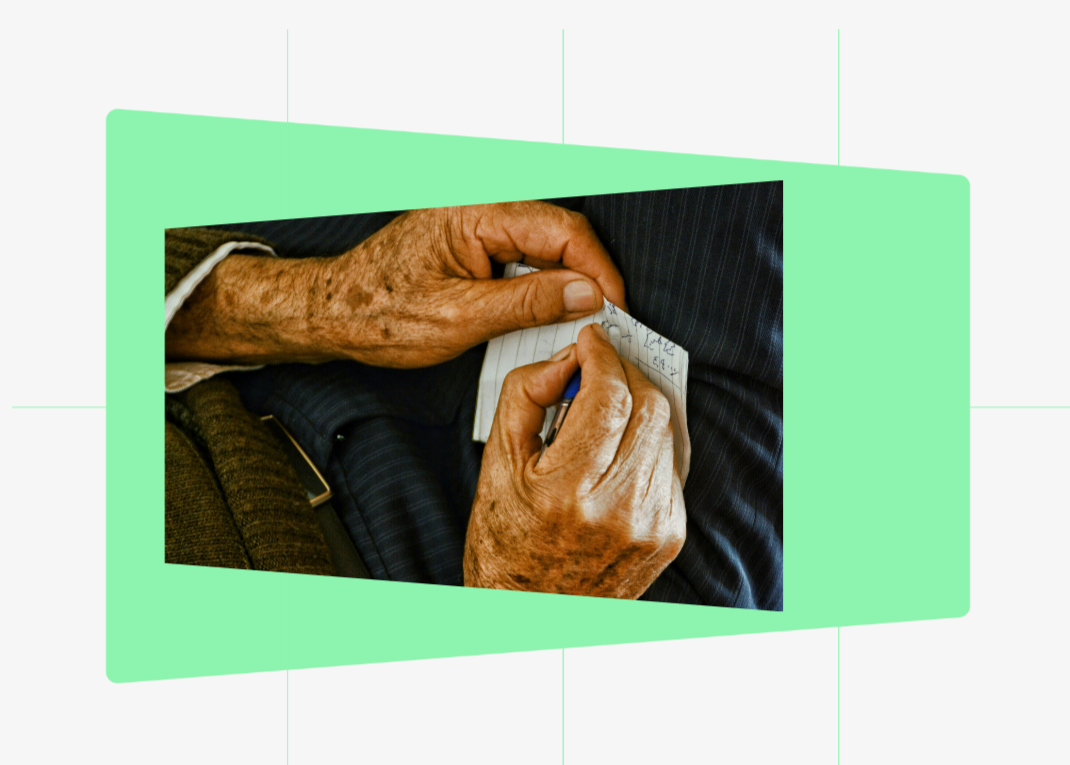
This has real implications for everyday life, as being offline can mean being marginalised in a host of different ways. When it comes to health, it can be difficult to book GP appointments, request prescriptions or manage long-term conditions such as diabetes via digital apps. It can have financial implications if you can’t access cost-saving online deals, manage your pension, reach customer services or do your banking online. Aside from the practical disadvantages, there’s a loss of social contact in missing out on access to neighbourhood groups and family networks – the human connections that originally sparked the rise of social media.
A new way of tackling digital exclusion
Traditional responses to the issue have been siloed. They have tended to either focus on access to devices or on surmounting the hurdle of IT education, but these assumptions don’t always address the nuanced reasons why people aren't online. To develop this further, DG Cities has been trialling a new approach for the Department for Science, Innovation and Technology (DSIT).
Instead of just trying to change individual behaviour, Behavioural Systems Mapping (BSM) maps the entire neighbourhood ‘system’, including local authorities, trusted individuals, charities and service design to identify root causes. Returning to the idea of that understanding of hyper-local systems and social mechanisms, the team has tested this in five diverse communities and we’re excited to release the resulting ‘blueprints for action’ soon. It’s a way for local authorities to move beyond generic skills training toward effective place-based interventions – a means to leverage trusted local actors and accessible service design to bring about a fundamental shift on this issue.
A flexible approach to anticipating the emerging digital divide?
At the same time, the pace and emerging capabilities of technology are becoming increasingly divisive. Not everyone wants to be online, all the time. There are movements to reduce tech-based learning platforms in schools, cut smartphone use and limit access to social media for teenagers. Many offices now have a tech-free sanctuary, digital detoxing is growing in popularity, ‘analogue’ activities are seeing a resurgence. For policymakers and local authorities, this is another aspect of digital inclusion to consider: how do we design services not just for the inadvertently digitally excluded, but also the deliberately so? How do we factor in those who reject the expectation of online-first services or AI-enabled tools: the recognition that ‘digital-first’ must not mean ‘digital-only’?
The most important factor to enable successful uptake of services is choice. This is perhaps the most exciting aspect of our latest research, as the approach we have been trialling can be applied to a range of issues, to keep pace as behaviours and technologies evolve.
