
New project underway! The School for Government at King’s College London is partnering with DG Cities and the Department for Transport (DfT) on a new national research initiative funded by the Cabinet Office’s Evaluation Accelerator Fund.
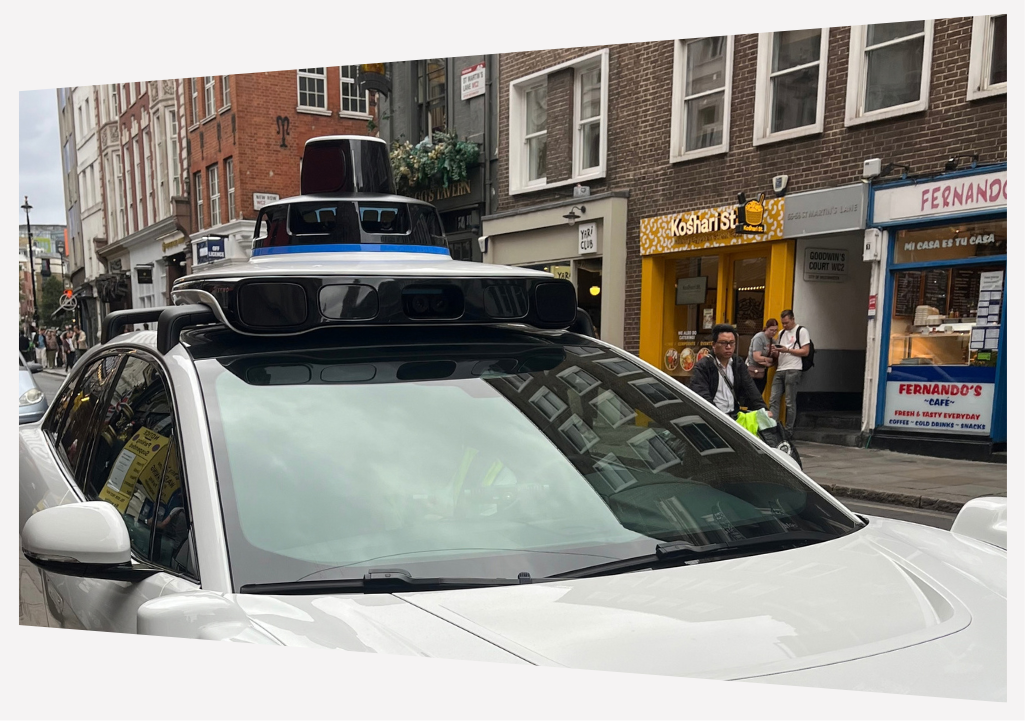
Automated vehicles are coming closer
As automated vehicles (AVs) move closer to commercial rollout across the UK, policy-makers and local authorities require robust evidence on public attitudes, expectations and communication needs. This study is designed to evaluate how best to inform and engage citizens so they can make confident, informed decisions about using AV services. The project will combine academic research and practical trials across three main stages:
Rapid evidence assessment: A comprehensive review of existing research on public engagement with automated vehicles.
Randomised controlled trial: Design and testing of behaviourally informed communication strategies through an adaptive, five-wave trial across a nationally representative UK sample.
Local authority playbook: Development of an evidence-based toolkit to provide practical guidance for local authorities preparing their local communities for upcoming AV deployments.
The latest project builds on previous joint research between DG Cities and King's College London, which used online surveys to investigate how people respond to negative information about AVs and what core factors influence public willingness to use self-driving transport.
Dr Sanchayan Banerjee, Senior Lecturer in Economics and Public Policy at the School for Government, noted that while the public may be open to automated transit options like autonomous taxis, key expectations around safety, human backup, accountability, fair pricing and safeguards must be clearly understood and addressed to maintain trust.
At DG Cities, the work is being led by Director of Research & Insights, Ed Houghton, Behavioural Scientist, Lara Suraci and Balazs Csuvar, Director of Innovation and Net Zero, who recently undertook national research into the DfT’s statement of safety principles for self-driving vehicles.
Ed Houghton: “Automated taxis are running services on London roads and are expected to go fully self-driving in the near future. This will be a major change for London’s transport system - and the public. The success of these services depends on whether people adopt and make use of them for their daily travel needs - this research will explore what information is needed to help the public understand how these services work and make their own decisions about if and how to use them.”
Through this current collaboration, the aim is to continue to bridge the gap between technical innovation, public policy and community engagement to ensure local authorities are equipped with useful, practical information as automated mobility scales across the UK.